If your tooth has a small cavity or minor damage, a dental filling may be enough. However, if the tooth is severely decayed, cracked, weakened, or has undergone root canal therapy, dental crowns are often the better long-term solution. The right treatment depends on how much healthy tooth structure remains and your dentist’s evaluation.
For many patients in Kitchener, choosing the correct restoration early can help prevent future complications, preserve natural teeth, and reduce the need for more extensive dental treatment.
Dental Crown vs Dental Filling at a Glance
| Factor | Dental Filling | Dental Crown |
|---|---|---|
| Purpose | Repairs small areas of damage | Restores and protects the entire tooth |
| Best For | Small to moderate cavities | Large cavities, cracks, weakened teeth |
| Tooth Coverage | Partial | Full coverage |
| Durability | Good for minor restorations | Excellent for heavily damaged teeth |
| Treatment Time | Usually one visit | Typically two visits |
| Strength | Moderate | High |
| Longevity | Several years | Often 10–15+ years with proper care |
| Protection Against Fractures | Limited | Excellent |
Understanding Dental Crowns and Dental Fillings
When patients visit a dentist because of tooth pain, sensitivity, decay, or a cracked tooth, one of the most common questions is whether they need a filling or a crown.
Both treatments restore damaged teeth, but they serve different purposes.
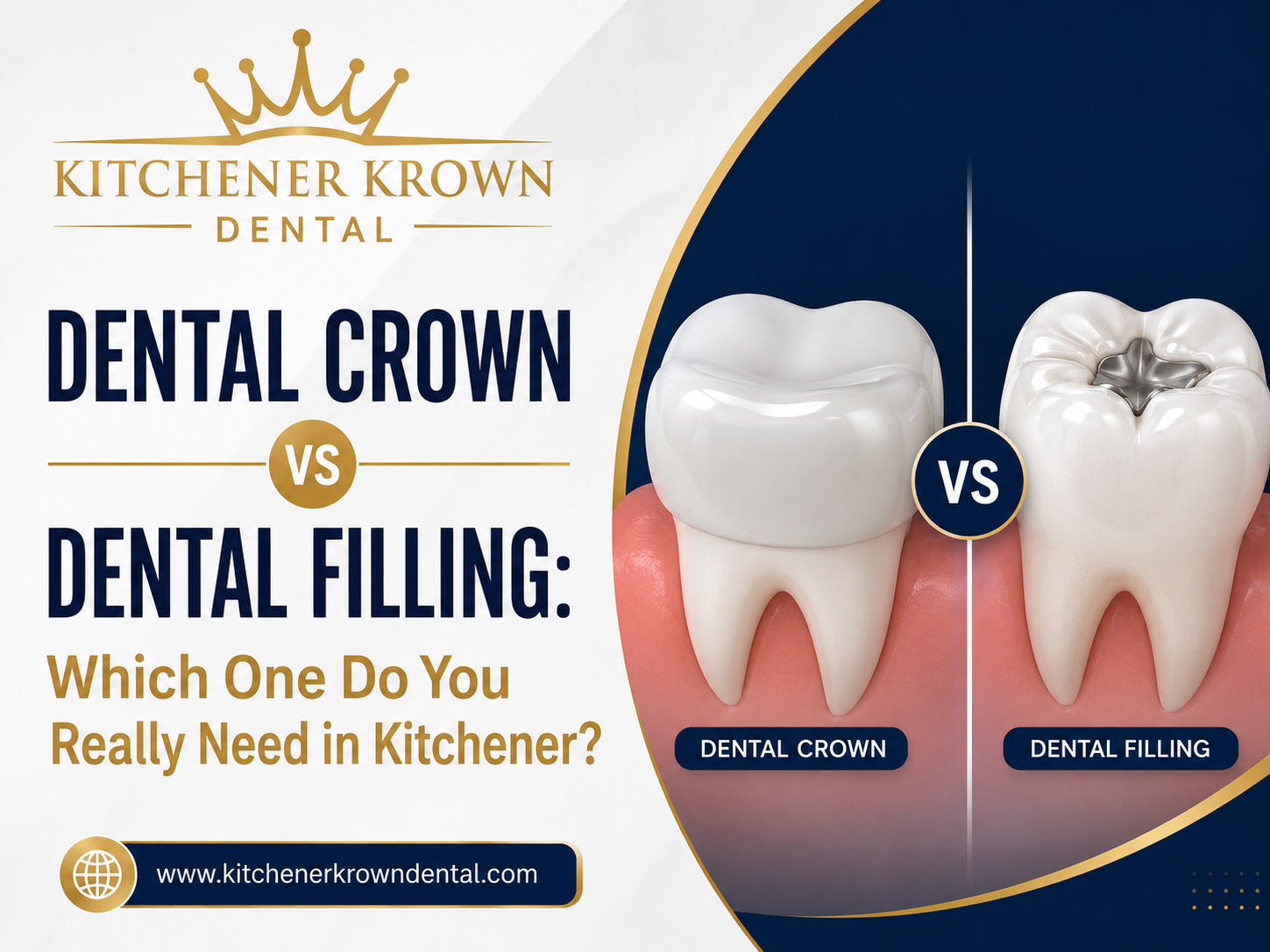
A filling repairs a specific damaged area of a tooth, while a dental crown completely covers and protects the visible portion of the tooth. The decision depends on the amount of tooth structure remaining, the location of the tooth, bite pressure, and long-term oral health goals.
At Kitchener Krown Dental, treatment recommendations focus on preserving natural teeth while ensuring patients receive durable and functional restorations through our restorative dental care services.
What Is a Dental Filling?
A dental filling is a restorative treatment designed to repair teeth affected by tooth decay, small fractures, or minor wear.
After removing the damaged portion of the tooth, the dentist fills the space with a durable material, most commonly composite resin.
Fillings are often recommended when:
-
- A cavity is detected early
-
- The tooth remains structurally strong
-
- Damage is limited to a small area
-
- Minor chips need cosmetic repair
-
- Decay has not compromised the tooth’s integrity
Modern composite fillings closely match the colour of natural teeth, making them a popular choice for both front and back teeth.
Benefits of Dental Fillings
-
- Preserve more natural tooth structure
-
- Cost-effective treatment
-
- Natural appearance
-
- Usually completed in one appointment
-
- Effective for early-stage tooth decay
However, fillings may not provide sufficient support when a tooth has lost a significant amount of its natural structure.
What Are Dental Crowns?
Dental crowns are custom-made restorations that completely cover the visible portion of a damaged tooth.
They function like a protective cap and are designed to restore strength, shape, appearance, and functionality.
Dental crowns may be made from:
-
- Porcelain
-
- Zirconia
-
- Ceramic
-
- Porcelain-fused-to-metal
Today’s crowns are highly aesthetic and closely resemble natural teeth. Learn more about our dental crown and bridge treatments.
Benefits of Dental Crowns
-
- Strengthen weakened teeth
-
- Restore chewing ability
-
- Prevent fractures
-
- Improve appearance
-
- Protect teeth after root canal therapy
-
- Provide long-term durability
For severely damaged teeth, dental crowns are often considered the gold standard of restorative dentistry.
When Is a Filling the Right Choice?
Many people search online for:
-
- Can a cavity be fixed with a filling?
-
- Do I need a crown for a cavity?
-
- Is a filling enough for tooth decay?
A filling is generally recommended when the damage is relatively small.
Small to Moderate Cavities
When decay affects only a limited area of the tooth, a filling can effectively restore function and appearance.
Minor Chips and Wear
Small cosmetic imperfections often do not require full tooth coverage.
Healthy Remaining Tooth Structure
If most of the natural tooth remains intact, a filling is often sufficient.
Early Treatment
Routine dental examinations can detect cavities before they become extensive enough to require dental crowns.
When Do You Need Dental Crowns?
There are situations where a filling simply cannot provide the support necessary to preserve the tooth.
Large Cavities
When decay destroys a substantial portion of the tooth, the remaining structure may become too weak to support a filling.
Cracked Teeth
Cracks can spread over time due to chewing pressure.
Dental crowns help stabilize the tooth and reduce the risk of further damage.
After Root Canal Therapy
Teeth treated with root canal therapy often become more brittle.
Dental crowns help protect these teeth from fractures.
Broken Teeth
A severely fractured tooth often requires full-coverage protection.
Large Existing Fillings
Older teeth with multiple large fillings may eventually weaken.
A crown can provide additional structural reinforcement.
Severe Tooth Wear
Patients who grind or clench their teeth may experience significant enamel loss that requires comprehensive restoration.
The Biggest Risk of Choosing a Filling When You Need a Crown
One of the most common mistakes is delaying a recommended dental crown.
Although a filling may initially appear less expensive, it can create additional complications when placed in a severely weakened tooth.
Potential risks include:
-
- Tooth fractures
-
- Recurrent decay
-
- Broken fillings
-
- Increased sensitivity
-
- Emergency dental visits
-
- Root canal treatment
-
- Tooth extraction
Choosing the appropriate restoration from the beginning often leads to better long-term outcomes.
Dental Crown vs Filling: Which Lasts Longer?
Longevity is a major factor for many patients.
Dental Fillings
Most composite fillings can last several years with proper care.
However, larger fillings tend to experience greater wear and stress.
Dental Crowns
Dental crowns are designed to withstand significant chewing forces and often last 10 to 15 years or longer.
Factors affecting lifespan include:
-
- Oral hygiene habits
-
- Diet
-
- Teeth grinding
-
- Regular dental visits
-
- Material selection
For heavily damaged teeth, crowns generally offer greater longevity and durability.
Dental Crown Materials Explained
Not all crowns are identical.
Porcelain Crowns
Popular for front teeth because of their natural appearance.
Zirconia Crowns
Known for exceptional strength and durability.
Ceramic Crowns
Offer excellent aesthetics and biocompatibility.
Porcelain-Fused-to-Metal Crowns
Combine strength and aesthetics.
Your dentist will recommend the most appropriate material based on the location of the tooth and your treatment goals.
What Happens During a Dental Crown Procedure?
Patients often ask whether getting a dental crown is complicated.
The process is straightforward and comfortable.
Step 1: Examination
Your dentist assesses the tooth using clinical evaluation and digital imaging.
Step 2: Tooth Preparation
The damaged tooth is reshaped to accommodate the crown.
Step 3: Digital Impressions
Precise digital scans ensure an accurate fit.
Step 4: Temporary Crown
A temporary restoration may be placed while the permanent crown is fabricated.
Step 5: Final Placement
The custom crown is securely bonded to the tooth.
The result is a restoration that looks, feels, and functions like a natural tooth.
Cost Considerations: Dental Crown vs Filling
Patients often wonder whether they should save money by choosing a filling.
While fillings generally have a lower upfront cost, the best value depends on the condition of the tooth.
A restoration that fails prematurely can require:
-
- Replacement treatment
-
- Additional procedures
-
- Root canal therapy
-
- Emergency care
Dental crowns often provide better long-term value for significantly damaged teeth because they protect the remaining tooth structure.
Dental Crown vs Filling vs Onlay
Some patients may also hear about dental onlays.
Filling
Repairs a small area of damage.
Onlay
Covers a larger portion of the tooth than a filling but less than a crown.
Crown
Provides complete protection for the visible tooth.
Dentists choose among these options based on the extent of damage and preservation of healthy tooth structure.
How to Prevent Future Restorations
Whether you currently need a filling or dental crown, preventive care remains essential. The American Dental Association (ADA) recommends the following daily habits to protect your teeth.
Brush Twice Daily
Use fluoride toothpaste and proper brushing techniques.
Floss Every Day
Flossing removes plaque between teeth where cavities often begin.
Limit Sugary Foods
Reducing sugar consumption helps prevent tooth decay.
Schedule Routine Dental Visits
Regular examinations identify issues before they become serious.
Wear a Night Guard
Patients who grind their teeth can protect restorations and natural teeth.
Address Problems Early
Small cavities are easier and less expensive to treat than advanced decay.
Why Early Treatment Matters
Many patients delay treatment because symptoms seem minor.
Unfortunately, tooth decay often progresses silently.
A small cavity today may require only a filling.
Waiting too long could result in:
-
- Extensive decay
-
- Root canal therapy
-
- Dental crowns
-
- Tooth loss
Early intervention often preserves more natural tooth structure and reduces treatment complexity. According to Health Canada, regular dental visits and prompt treatment play a key role in maintaining long-term oral health across the population.
Why Patients in Kitchener Choose Dental Crowns
Residents throughout Kitchener, Waterloo, Cambridge, and the surrounding Waterloo Region increasingly choose dental crowns when seeking long-lasting solutions for damaged teeth.
Dental crowns provide:
-
- Comprehensive protection
-
- Improved appearance
-
- Greater durability
-
- Enhanced chewing function
-
- Long-term tooth preservation
At Kitchener Krown Dental, every treatment plan is customized to the patient’s oral health needs, ensuring the most appropriate restorative solution is recommended.
Key Takeaways
-
- Fillings are ideal for small cavities and minor tooth damage.
-
- Dental crowns protect teeth that are weakened, cracked, or extensively decayed.
-
- Crowns typically provide greater durability and long-term protection.
-
- Early diagnosis can prevent small problems from becoming major restorations.
-
- The best treatment depends on the amount of healthy tooth structure remaining.
Frequently Asked Questions
1.Is a dental crown stronger than a filling?
Yes. Dental crowns cover and protect the entire tooth, making them significantly stronger for damaged teeth.2.How do I know if I need a filling or a crown?
Your dentist will assess the amount of decay, existing restorations, cracks, and remaining tooth structure before recommending treatment.3.Can a filling be replaced with a crown later?
Yes. Many teeth with large fillings eventually require dental crowns for additional support and protection.4.Are dental crowns worth the investment?
For severely damaged teeth, dental crowns often provide superior long-term value because they reduce the risk of fractures and future complications.5.Does every root canal need a crown?
Many back teeth require crowns after root canal therapy because they experience substantial chewing pressure.6.How long do dental crowns last?
With proper care, many dental crowns can last 10 to 15 years or longer.7.Can a cracked tooth be saved with a crown?
In many cases, yes. Dental crowns help protect and stabilize cracked teeth before the damage worsens.8.What happens if I delay getting a crown?
Delaying treatment can increase the risk of tooth fractures, infection, root canal therapy, or tooth loss.Final Thoughts
When comparing a dental crown and a dental filling, the best choice depends on the severity of damage, the strength of the remaining tooth, and your long-term oral health goals. While fillings are highly effective for smaller cavities, dental crowns offer unmatched protection for weakened, cracked, and heavily restored teeth.
If you are experiencing tooth pain, sensitivity, or visible damage, a professional evaluation can determine whether a filling or one of today’s advanced dental crowns is the most suitable solution. Taking action early helps protect your smile, preserve natural teeth, and avoid more extensive treatment in the future. For guidance from a trusted regulatory body, you can also refer to the Canadian Dental Association (CDA) for further oral health resources.
If you’d like a professional evaluation, Kitchener Krown Dental offers comprehensive restorative dentistry services including fillings, crowns, and bridges, all tailored to your unique oral health needs.