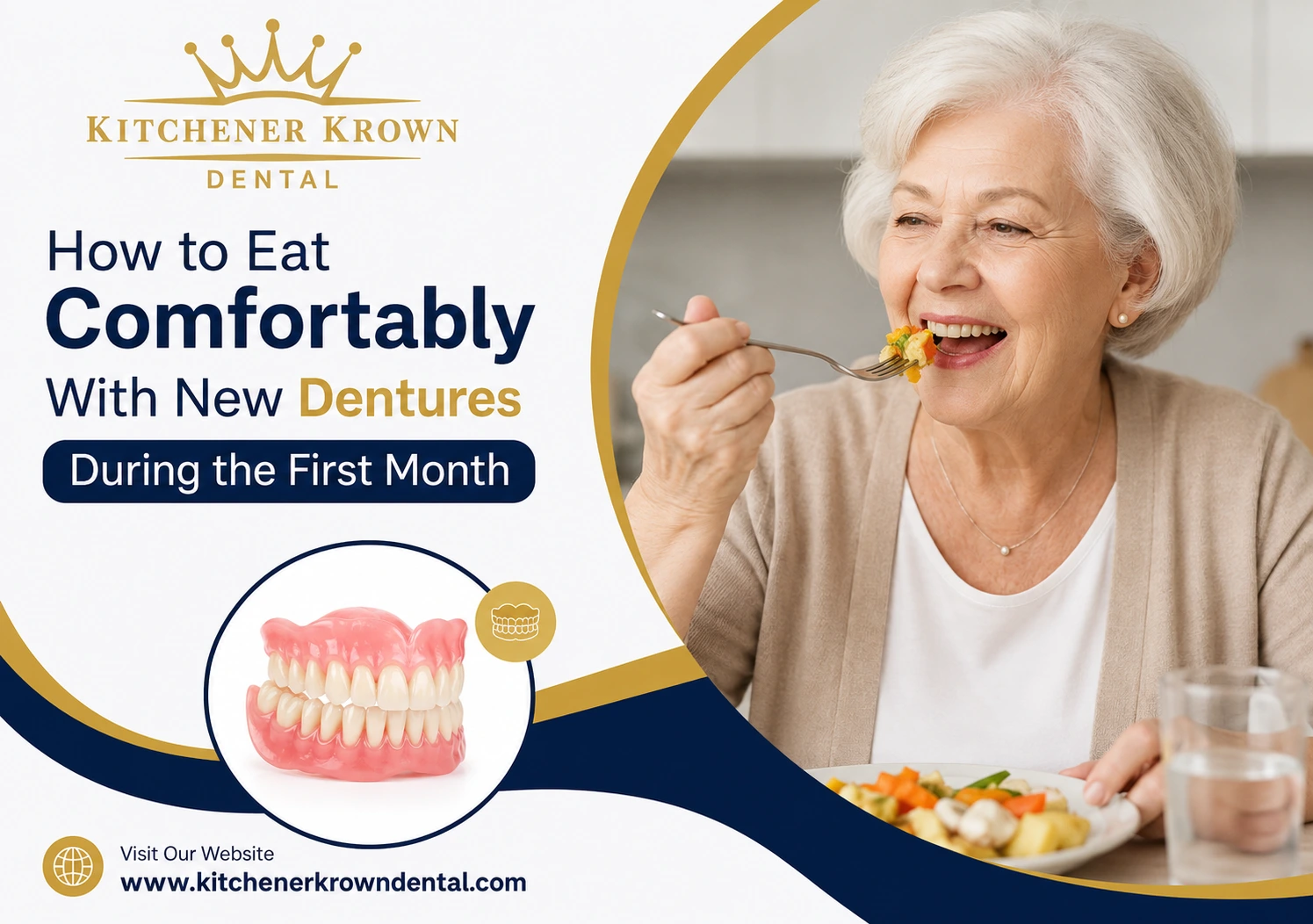
How to Eat Comfortably With New Dentures During the First Month
Getting dentures is a life-changing step toward restoring your smile, improving your ability to chew, and boosting your confidence. However, the first month with new dentures can feel like a learning experience. Your mouth needs time to adapt, your gums may feel tender, and eating your favorite foods might seem challenging at first.
The good news is that these challenges are temporary. With the right approach, patience, and proper denture care, you’ll gradually regain comfort while eating a wide variety of foods.
At Kitchener Krown Dental, we often remind patients that adjusting to dentures is a journey rather than an overnight transformation. Following the right habits during the first month can significantly improve comfort and help your mouth adapt more quickly.
This comprehensive guide explains exactly what to expect during your first month with dentures, which foods to eat, which foods to avoid, practical chewing techniques, and expert tips that make the transition easier.
Quick Answers About Eating With New Dentures
Question
Short Answer
Why does eating feel different?
Dentures rest on the gums instead of tooth roots, so muscles need time to relearn chewing.
When can I eat normally again?
Most patients feel significantly more comfortable within 3-4 weeks.
What foods should I avoid early on?
Hard, sticky, crunchy, and chewy foods such as nuts, popcorn, and tough steak.
Is soreness normal?
Yes, mild soreness is common and typically improves with proper denture adjustments.
Do I need denture adhesive?
Sometimes, for extra stability, but well-fitting dentures shouldn’t rely heavily on it.
Why Eating Feels Different With New Dentures
Many first-time denture wearers wonder why eating suddenly feels so different.
Unlike natural teeth, dentures rest on your gums instead of being anchored by roots. Because of this, your brain and facial muscles need time to relearn how to chew, bite, and swallow comfortably.
Common experiences include:
Mild soreness
Increased saliva production
Feeling that dentures are “too big”
Difficulty chewing
Minor speech changes
Pressure points on the gums
These symptoms are completely normal during the adjustment period and usually improve with regular wear and proper denture adjustments. The American Dental Association (ADA) notes that most new denture wearers go through a similar adaptation period before chewing feels fully natural again.
What to Expect During the First Month
Week 1: Focus on Healing
The first week is usually the most challenging.
Your gums may still be healing if you recently had teeth extracted. Tenderness and pressure are common, making soft foods the safest choice.
During this stage:
Eat slowly.
Take small bites.
Avoid hard or crunchy foods.
Drink plenty of water.
Follow your dentist’s instructions carefully.
Don’t worry if meals take longer than usual. Your mouth is learning a completely new way to chew.
Week 2: Building Confidence
By the second week, soreness often begins to decrease.
Most patients notice:
Better chewing control
Less gum discomfort
Improved denture stability
Greater confidence eating around others
You can begin introducing foods with slightly firmer textures while continuing to avoid extremely hard or sticky items.
Week 3: Strengthening Your Chewing Muscles
Around the third week, your facial muscles become stronger and more coordinated.
Now you can gradually add foods like:
Tender chicken
Soft cooked vegetables
Rice
Pasta
Soft sandwiches
Ground turkey
Soft fruits
Continue chewing slowly and evenly on both sides of your mouth.
Week 4: Returning to a More Normal Diet
By the end of the first month, many denture wearers can comfortably enjoy a much wider variety of foods.
While every patient adapts differently, most people feel significantly more confident eating in social situations.
Some foods may still require extra care, but overall comfort should be greatly improved.
Best Foods to Eat During the First Month
Choosing the right foods makes a huge difference in your comfort.
Soft Proteins
Protein helps support healing while providing energy.
Great options include:
Scrambled eggs
Baked fish
Ground chicken
Ground turkey
Tofu
Cottage cheese
Yogurt
Soft Vegetables
Cook vegetables until they are tender.
Good choices include:
Carrots
Sweet potatoes
Green beans
Squash
Peas
Spinach
Fruits
Choose soft fruits that don’t require excessive chewing.
Examples include:
Bananas
Peaches
Pears
Applesauce
Mango
Avocado
Grains
Soft grains are easier to chew than crusty breads.
Consider:
Oatmeal
Rice
Pasta
Mashed potatoes
Cream of wheat
Soft tortillas
Healthy Snacks
Easy snack ideas include:
Greek yogurt
Smoothies
Cottage cheese
Pudding
Soft cheese
Hummus
Foods to Avoid During the First Month
Some foods can cause discomfort or even loosen your dentures.
Avoid:
Hard nuts
Popcorn
Ice
Hard candy
Sticky caramel
Chewing gum
Tough steak
Crusty bread
Corn on the cob
Whole apples
Crunchy chips
These foods can shift dentures and irritate healing gum tissue.
How to Chew Comfortably With Dentures
Learning new chewing techniques is one of the biggest adjustments.
Chew on Both Sides
Always chew evenly using both sides of your mouth.
This helps:
Balance pressure
Prevent denture tipping
Improve stability
Take Smaller Bites
Large bites make dentures less stable.
Instead:
Cut food into small pieces.
Eat slowly.
Chew thoroughly before swallowing.
Avoid Biting With Front Teeth
Biting directly into food with your front dentures may cause them to lift.
Instead:
Cut sandwiches.
Slice apples.
Break burgers into smaller portions.
Eat Slowly
There’s no rush.
Eating slowly allows:
Better chewing control
Improved comfort
Less irritation
Tips for Reducing Soreness While Eating
Minor soreness is common during the adjustment period.
To stay comfortable:
Rinse with warm salt water.
Remove dentures as instructed.
Keep dentures clean.
Stay hydrated.
Visit your dentist if sore spots continue.
Persistent pain should never be ignored because your dentures may simply need a small adjustment. If soreness does not improve, our emergency dentist team can assess the fit and provide prompt relief.
Staying Hydrated Helps
Dry mouth can make dentures less comfortable.
Drink water throughout the day to:
Improve denture suction
Reduce irritation
Help swallowing
Maintain healthy oral tissues
Limit sugary drinks and excessive caffeine whenever possible. Health Canada notes that good hydration supports oral tissue health and overall wellness, which is especially important while your mouth is still adjusting.
Should You Use Denture Adhesive?
Many patients ask if denture adhesive is necessary.
During the adjustment period, your dentist may recommend a small amount of adhesive for additional stability.
However:
Don’t overuse adhesive.
Apply only as directed.
Continue scheduling follow-up adjustments.
Well-fitting dentures shouldn’t rely heavily on adhesive. The Canadian Dental Association (CDA) advises that adhesive should support a properly fitted denture, not compensate for one that no longer fits correctly.
Common Mistakes New Denture Wearers Make
Avoid these common habits:
Eating Too Fast
Rushing increases the chance of soreness.
Choosing Difficult Foods Too Soon
Give your mouth time to adapt.
Skipping Follow-Up Appointments
Small adjustments greatly improve comfort.
Wearing Poorly Fitting Dentures
Loose dentures should always be evaluated.
Not Cleaning Dentures Daily
Clean dentures reduce irritation and improve oral health. Our teeth cleaning team can also show you the best techniques for keeping both your dentures and remaining natural teeth healthy.
Signs Your Dentures Need Adjustment
Contact your dentist if you notice:
Persistent sore spots
Dentures slipping often
Difficulty speaking after several weeks
Pain while chewing
Gum swelling
Clicking sounds
Uneven bite
A simple adjustment often solves these problems quickly.
Long-Term Eating Success With Dentures
After your first month, continue practicing healthy eating habits.
Most experienced denture wearers eventually enjoy foods such as:
Chicken
Steak (cut small)
Fresh vegetables
Salads
Pizza
Burgers
Fresh fruit
As your muscles adapt, eating becomes more natural and comfortable. For patients who still have some natural teeth needing repair, treatments such as dental bridges and crowns can work alongside dentures for a complete, functional smile.
Lifestyle Tips That Make the Transition Easier
Successful denture wear involves more than food choices.
Try these habits:
Eat meals at consistent times.
Practice reading aloud to strengthen facial muscles.
How long does it take to eat normally with dentures?Most people feel significantly more comfortable within three to four weeks, although complete adaptation may take a few months.
Can I eat steak with new dentures?Not during the first few weeks. Wait until your dentures feel stable, then choose tender cuts sliced into small pieces.
Why do my dentures move while chewing?This is common during the adjustment period. Your muscles are still learning to stabilize the dentures. If movement continues, your dentist may recommend an adjustment.
Are soft foods necessary?Yes. Soft foods reduce pressure on healing gums and make the transition much easier.
Can I bite into an apple?It’s better to slice apples into thin pieces instead of biting directly with your front dentures.
Should I sleep with dentures?Most dentists recommend removing dentures at night to allow your gums to rest unless instructed otherwise after immediate denture placement.
How often should dentures be cleaned?Clean them every day using a denture cleaner and a soft brush. Proper hygiene helps prevent stains, bacteria buildup, and unpleasant odors.
When should I call my dentist?Contact your dentist if you experience severe pain, ongoing sore spots, loose dentures, difficulty chewing after several weeks, or visible damage to your dentures.
Final Thoughts
Adjusting to dentures takes patience, but every week brings noticeable improvements. By choosing soft, nutritious foods, practicing proper chewing techniques, staying hydrated, and attending follow-up appointments, you’ll build confidence and enjoy meals comfortably again.
The first month is all about allowing your mouth and muscles to adapt. Resist the urge to rush the process or test difficult foods too early. Small, consistent improvements lead to long-term success.
With proper care, regular dental checkups, and healthy eating habits, dentures can restore not only your smile but also your ability to eat comfortably and confidently for years to come. Ready to make your first month easier? Book a consultation with our Kitchener dentist team today.