
Kitchener Krown Dental

kitchener dental clinic

filling for tooth decay
dental

Filling for Tooth Decay: When Do You Need a Dental Filling?

Tooth decay doesn’t always cause pain in its early stages. That’s why many people are surprised to learn they need a filling during a routine checkup. A filling for tooth decay is one of the most common ways dentists treat cavities. But not every case of decay reaches that point, and not every filling works the same way. At Kitchener Krown Dental, patients often ask how dentists make this call and what to expect. This guide walks through how decay develops, when you need a filling, and what the procedure involves. Quick Answer You typically need a filling for tooth decay once a cavity breaks through the outer enamel and reaches the softer dentin layer beneath it. Decay won’t reverse on its own at this stage. Removing the damaged tissue and sealing the space with filling material stops the decay from spreading toward the nerve. Your dentist confirms the need for a filling with a visual exam, X-rays, and sometimes a dental probe. How Tooth Decay Develops Tooth decay begins when oral bacteria produce acids that gradually wear away the enamel, the tooth’s hard outer layer. Plaque buildup, frequent sugar or starch intake, and inconsistent brushing often drive this process. It can take months or years to unfold. In the earliest stage, you might notice a white or chalky spot. At this point, fluoride exposure and better oral hygiene can still help the enamel repair itself — no drilling or filling required. Once the acid breaks through the enamel surface, however, the damage becomes permanent. The tooth structure can’t rebuild itself at that point. Decay also tends to progress faster once it reaches the softer dentin layer underneath. This is generally where a filling for tooth decay becomes the right next step. The goal shifts from prevention to stopping the spread of existing damage. How a Dentist Decides You Need a Filling A cavity isn’t always visible or painful, which is why routine exams matter even when a tooth feels fine. During an assessment, a dentist typically looks at a few things before recommending a filling for tooth decay: These findings vary from person to person. Only a dental professional can assess whether a specific tooth needs a filling, needs monitoring, or requires different treatment altogether. New-patient exams typically pair this assessment with a gum-health check and oral cancer screening. That gives a complete picture of oral health, not just the tooth in question. Cavity With Filling: What the Procedure Involves Once your dentist confirms a cavity, the filling procedure is usually straightforward. Most fillings finish in a single visit. In general terms, the dentist numbs the area, removes the decayed portion of the tooth, and cleans the remaining space. They then fill it with a dental material shaped to restore the tooth’s function and structure. The exact steps can vary slightly depending on the cavity’s location and the filling material used. But the overall purpose stays the same: remove the damaged tissue and seal the tooth to prevent further decay. What Are the Types of Dental Fillings There isn’t one universal filling material. The right option depends on the cavity’s location, the extent of the decay, and personal preference. Common types include: Composite resin (tooth-coloured) fillings – A popular option because dentists can shade-match the material to blend with surrounding teeth. Composite bonds directly to the tooth structure, and dentists often use it for cavities in visible areas. Amalgam (silver) fillings – A long-standing material known for durability, particularly in back teeth that handle heavier chewing forces. It’s more visible than composite due to its metallic colour. Glass ionomer fillings – Dentists sometimes use this material in specific situations, including certain pediatric cases, since it can release fluoride over time. Ceramic or porcelain fillings – Dentists custom-make these fillings, which often resist staining better and typically take more than one visit to place. There’s no single “best” filling material for every patient. A dentist can walk you through which option suits your tooth, its location, and your priorities around appearance, durability, and cost. Teeth and Fillings: How Long Do They Actually Hold Up How long do dental fillings last? It depends on the material and how you use and care for the tooth afterward. As a general guide: These are general ranges, not guarantees. Grinding, ongoing decay around the filling’s edges, and the size of the original cavity can all affect how long a filling lasts. Regular dental checkups allow your dentist to monitor existing fillings for wear or new decay developing nearby. Can You Eat After a Dental Filling? This is one of the most common questions patients ask right after treatment. If you received a composite filling, it typically hardens immediately under a curing light. Eating shortly after the appointment is usually fine once the numbness wears off. If you received an amalgam filling, dentists often recommend waiting about 24 hours before chewing on that side. The material continues to harden fully over that period. In either case, avoid very hot, hard, or sticky foods right after the procedure while the local anesthetic wears off. Biting your cheek or tongue without realizing it is a common, avoidable mishap. Your dentist will give you guidance specific to the material used and the tooth treated. When a Filling Isn’t Enough A filling for tooth decay works well when the damage stays limited to the enamel and dentin. However, if decay progresses far enough to reach the tooth’s nerve (the pulp), a filling alone may not resolve the problem. You may need a root canal or other treatment instead. A few signs suggest decay has advanced beyond what a filling can fix. These include persistent or throbbing pain, sensitivity that lingers well after eating something hot or cold, and visible swelling near the tooth. This is also why treating tooth decay early works best. The sooner you treat a cavity, the more likely a simple filling will do the job. Risks and Limitations to Understand Fillings are a well-established,
how long does a root canal take
dental

How Long Does a Root Canal Take? A Complete Guide to Treatment Time & Recovery

A root canal appointment typically takes between 30 and 90 minutes, though the exact time depends on which tooth is being treated, how many canals it has, and how much infection is present. Some cases are finished in a single visit, while others require a second appointment before a permanent filling or crown is placed. If you’ve just been told you need this treatment, understanding what affects the timeline can make the whole process feel far more predictable. This guide walks through typical root canal treatment appointment lengths, what makes some procedures longer than others, how to recognize the warning signs that often lead to this diagnosis, what recovery and pain after treatment usually look like, and how root canal therapy compares with having a tooth removed. If you’re searching for a root canal in Kitchener, the general timelines below apply, though your dentist can give you a more precise estimate once they’ve examined your tooth. Quick Answer Most root canal appointments last 30 to 90 minutes of active treatment time, depending on the tooth involved. Front teeth with a single canal are usually the fastest, often finishing in under an hour. Molars, which can have three or four canals, tend to take longer and sometimes need a second visit. If a crown is needed afterward, that’s a separate appointment scheduled a few weeks later, once the tooth has settled. How Long Does a Root Canal Take? Typical Timeframes by Tooth The type of tooth being treated is one of the biggest factors in how long a root canal takes, because different teeth have different numbers of root canals. These ranges reflect general clinical patterns rather than a guarantee for any individual case. A dental professional can only estimate your specific appointment length after examining the tooth and reviewing your X-rays. What this means for you: If you’re trying to plan around work or childcare, ask which category your tooth falls into at your consultation. A front-tooth root canal is usually easy to fit into a lunch break, while a molar treatment is worth blocking off more of your afternoon for, just in case. What Affects How Long a Root Canal Takes There’s no single answer to “how long does a root canal take” that applies to everyone — a few key variables explain why one person’s root canal might be finished in 40 minutes while another person’s takes closer to two hours. Number and shape of root canals. Some canals run in a fairly straight line, while others curve sharply or branch unexpectedly. Curved or unusually narrow canals take more time to clean and shape thoroughly. Severity of infection or inflammation. A tooth with significant infection may need additional disinfection, and in some cases the dentist will place medication inside the tooth and ask you to return for a second visit once the infection has calmed down. Whether it’s a first treatment or a retreatment. Redoing a root canal on a tooth that was previously treated can take longer than treating a tooth for the first time, since old filling material has to be removed before the canals can be cleaned again. Access and visibility. Molars toward the back of the mouth can be harder to reach, which may add time compared with a more accessible front tooth. Use of modern imaging. Many practices, including ones that use digital X-rays, can get a clearer view of the tooth’s internal anatomy before starting, which can help reduce surprises mid-procedure. It’s worth separating chair time from the total treatment timeline. The procedure itself might take under 90 minutes, but the full course of care, from initial exam to a permanent crown, can span a few weeks once you include healing time and a follow-up visit for the crown. How to Tell If You Need a Root Canal Not every toothache means you need a root canal, and only a dental examination and X-rays can confirm it. That said, there are common signs that often prompt people to book an appointment: According to the Canadian Dental Association and the Canadian Academy of Endodontics, an abscessed tooth may cause pain and swelling, and a dentist may also spot infection on a routine X-ray even without obvious symptoms. Leaving an abscessed tooth untreated can lead to more serious oral health problems over time, which is one reason dentists generally recommend addressing symptoms promptly rather than waiting to see if they pass. If you notice any of these signs, the most reliable next step is a dental exam rather than trying to self-diagnose. Some tooth pain has other causes entirely, and only an assessment with digital imaging can confirm what’s actually happening beneath the surface. What Is a Root Canal? A root canal, also called endodontic treatment, removes infected or inflamed tissue (the pulp) from inside a tooth, then cleans, shapes, and seals the empty space to prevent bacteria from re-entering. The pulp contains nerves and blood vessels that nourish the tooth during development, but a fully formed tooth can function without it. Once the canals are sealed, a filling or crown restores the tooth’s strength so it can go back to normal use. The goal of a root canal is to save a natural tooth that would otherwise likely need to be removed due to infection or damage. Root Canal vs. Tooth Extraction: Comparing Your Options When a tooth is significantly infected or damaged, there are generally two paths forward: treat and save the tooth with a root canal, or remove it with a tooth extraction. Each has its own considerations. Root canal treatment preserves your natural tooth, which helps maintain your normal bite and reduces the need for a replacement like a bridge or implant later on. It’s often the preferred option when a tooth’s root structure is otherwise healthy enough to support the tooth long-term. Tooth extraction may be recommended when a tooth is too damaged to save, when there isn’t enough healthy structure left to restore, or in specific situations

Is Invisalign better than braces
dental

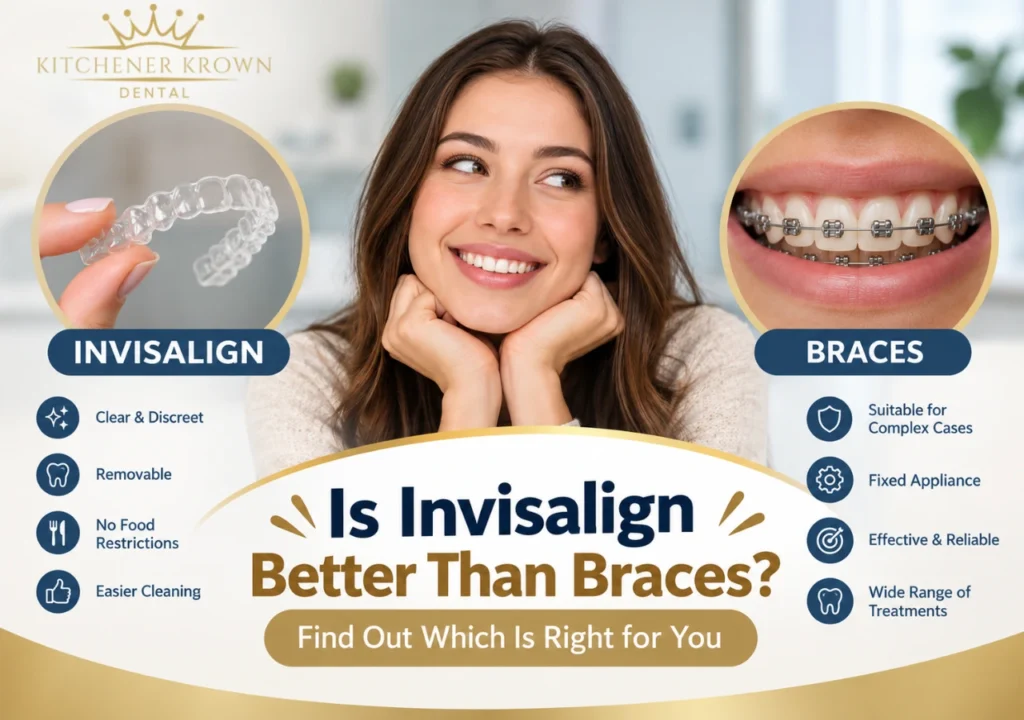
Is Invisalign Better Than Braces? Find Out Which Is Right for You

Is Invisalign better than braces? It’s one of the most common questions patients ask, and the honest answer is not always as simple as picking the option that looks better. Both treatments can straighten teeth and improve certain bite problems, but they work differently and may be better suited to different patients. So, is Invisalign better than braces? The answer depends on your teeth, bite, treatment goals, lifestyle and how consistently you can follow your treatment plan. Clear aligners can be an excellent option for many patients, particularly those who want a discreet and removable appliance. Braces, however, can provide greater control for many complex orthodontic problems. The best choice should be based on an individual dental assessment rather than appearance alone. Is Invisalign Better Than Braces? Whether Invisalign is better than braces really depends on your case. Invisalign may be appealing if you want a less visible, removable option that allows you to take the aligners out for eating, brushing and flossing. However, aligners require consistent wear and are not appropriate for every orthodontic case. Traditional braces remain a highly versatile treatment option and can address a broad range of tooth and bite problems. Your dental professional can assess your alignment and determine which approach is more suitable for your needs. Invisalign vs. Braces: What’s the Difference? Both treatments use controlled forces to gradually move teeth. The major difference is how that force is delivered. Invisalign uses a series of custom-made clear aligners. Each aligner is designed to make specific tooth movements before you progress to the next stage. Traditional braces use brackets attached to the teeth and wires that apply controlled pressure to move teeth. Braces remain attached throughout active treatment. Here’s a simple comparison: Feature Invisalign Traditional Braces Appearance Clear and discreet More noticeable Removable Yes No Eating Aligners are removed Certain foods may need to be avoided Brushing and flossing Aligners can be removed Requires cleaning around brackets and wires Wear responsibility Requires consistent patient compliance Appliance stays attached Treatment suitability Depends on the individual case Suitable for a broad range of orthodontic problems Visibility Low Higher Maintenance Clean aligners and teeth regularly Clean carefully around brackets and wires The comparison shows why there isn’t one treatment that is automatically better for everyone. Why Do People Choose Invisalign? One of the biggest reasons patients consider Invisalign is its appearance. The aligners are made from clear plastic and are designed to fit over the teeth, making them much less noticeable than traditional braces. This can be particularly attractive to adults and teens who are concerned about the appearance of orthodontic appliances. 1. Invisalign Is Discreet If appearance is important to you, clear aligners can provide a more subtle alternative to traditional braces. This may make Invisalign particularly appealing for people who regularly attend school, work meetings, social events or other situations where they prefer a less visible orthodontic appliance. 2. Aligners Are Removable, Unlike Braces Unlike braces, Invisalign aligners can be removed when eating, drinking certain beverages and cleaning your teeth. This gives patients more flexibility with their normal routine. However, removability also creates an important responsibility: the aligners need to be worn as directed. If they are frequently removed or forgotten, treatment may not progress as planned. The American Association of Orthodontists notes that clear aligners are typically worn for most of the day and require patient cooperation. 3. Oral Hygiene Can Be More Convenient Because Invisalign aligners can be removed, you can brush and floss without brackets and wires getting in the way. That doesn’t mean oral hygiene becomes optional. Your teeth should be cleaned thoroughly before putting the aligners back in. 4. Eating Is More Flexible With Invisalign, you remove the aligners before eating. This means you don’t have the same appliance-related food restrictions associated with fixed braces. After eating, you should clean your teeth appropriately before replacing the aligners. Why Might Braces Be Better for Some Patients? While Invisalign offers several advantages, traditional braces remain an important orthodontic treatment. Braces can address a broad range of orthodontic problems, including more complex tooth and bite concerns. Because they remain attached to the teeth, patients don’t have to remember to put them back in after eating or cleaning. 1. Braces Can Treat Complex Cases Better Than Invisalign Not every orthodontic problem can be treated predictably with clear aligners. Braces may be preferable when more complex tooth movements or greater control are required. The American Association of Orthodontists emphasizes that treatment selection depends on the complexity of the patient’s orthodontic problem. 2. You Don’t Have to Remember to Wear Them This can be an important consideration for children, teens or adults who may struggle with remembering removable appliances. Because braces are fixed to the teeth, they remain in place throughout treatment. 3. Braces Can Address a Broad Range of Alignment Problems Braces may be used for crooked or crowded teeth, bite problems and other orthodontic concerns. The American Dental Association notes that orthodontic treatment can address malocclusion, including crowded or crooked teeth and problems with how the upper and lower teeth meet. Is Invisalign Faster Than Braces? Is Invisalign better than braces when it comes to speed? This is one of the most common questions people ask when comparing the two treatments. The honest answer is: there is no universal treatment time for either option. Treatment duration depends on factors such as: A simpler alignment problem may require less treatment than a complex bite problem, regardless of whether Invisalign or braces are used. Therefore, choosing Invisalign simply because you want faster treatment may not be the best approach. The goal should be an appropriate treatment plan that addresses the underlying alignment or bite problem. Is Invisalign More Comfortable Than Braces? Comfort is another factor people weigh when deciding if Invisalign is better than braces. Invisalign aligners don’t use the traditional brackets and wires associated with braces. However, that doesn’t mean treatment is completely free from discomfort. Patients may notice pressure or temporary soreness when beginning

Scroll to Top