What do cavities look like? Cavities usually begin as small white chalky spots caused by mineral loss in the tooth enamel.
As decay progresses, they may appear yellow, brown, or black and can develop visible holes, rough surfaces, sensitivity, or pain. Early diagnosis by a dentist can often prevent more extensive treatment.
What Are Cavities and Why Do They Develop?
A cavity is a permanently damaged area of a tooth caused by tooth decay and cavities developing over time. While many people assume cavities suddenly appear, they actually form through a gradual process involving bacteria, dietary sugars, acid production, and weakened enamel.
The earlier a cavity is detected, the more conservative—and affordable—the treatment usually is.
According to the Canadian Dental Association, untreated tooth decay remains one of the most common chronic oral health conditions affecting Canadians of every age. Good preventive care and regular dental visits dramatically reduce the risk of extensive restorative treatment.
What Do Cavities Look Like at Different Stages?
Understanding how cavities change over time helps patients recognize warning signs before serious damage occurs.
Stage 1: White Spot Lesions
The earliest cavity often appears as a dull, chalky white area on the enamel.
This happens because minerals are being lost from the tooth surface—a process called demineralization.
At this stage:
-
- No hole is visible
-
- Pain is uncommon
-
- Fluoride treatments may reverse the damage
-
- Excellent oral hygiene can often stop progression
Many patients never notice these white spots on their own, making routine dental examinations especially valuable.
Stage 2: Yellow or Light Brown Discoloration
So what do cavities look like once the white spot stage passes? As minerals continue to disappear, affected areas begin changing colour.
You may notice:
-
- Yellow patches
-
- Light brown staining
-
- Slight surface roughness
-
- Food catching in small grooves
Although these changes can resemble harmless staining from coffee or tea, only a dental examination can determine whether active decay is present.
Stage 3: Dark Brown or Black Spots
At this point, patients often ask what do cavities look like when decay becomes more serious. As bacteria continue damaging enamel, cavities often become darker.
Signs include:
-
- Brown pits
-
- Black dots
-
- Visible grooves
-
- Rough tooth surfaces
-
- Increasing sensitivity
At this point, the enamel has usually broken down permanently and professional treatment is needed.
Stage 4: Visible Holes or Cavities
By now, what do cavities look like has a clear answer. Advanced decay creates obvious structural damage.
Patients may notice:
-
- Small holes
-
- Cracks
-
- Food becoming trapped
-
- Sharp edges
-
- Persistent tooth sensitivity
As a result, ignoring these symptoms allows bacteria to reach deeper layers of the tooth.
Stage 5: Severe Tooth Decay
Consequently, when decay reaches the dental pulp, symptoms often become much more noticeable.
These may include:
-
- Severe toothache
-
- Swelling
-
- Bad breath
-
- Pain when chewing
-
- Sensitivity to hot and cold
-
- Gum tenderness
Treatment at this stage may require root canal therapy, crowns, or extraction depending on the severity.
What Causes Cavities?
Many people ask what causes cavities, believing sugar alone is responsible.
The reality is more complex.
What causes dental cavities is a combination of several interacting factors.
Bacteria
Every mouth contains bacteria.
Certain bacteria, including Streptococcus mutans, feed on sugars and starches, producing acids that attack tooth enamel.
Frequent Sugar Consumption
It’s not only the amount of sugar that matters—but how often you consume it.
As a result, frequent snacking keeps acid levels elevated throughout the day, preventing teeth from recovering between meals.
Common high-risk foods include:
-
- Candy
-
- Soft drinks
-
- Sports drinks
-
- Sweetened coffee
-
- Dried fruit
-
- Sticky snacks
Poor Oral Hygiene
Put simply, plaque is a sticky film containing bacteria.
Without daily brushing and flossing, plaque remains on teeth, allowing acids to damage enamel continuously.
Dry Mouth
Saliva naturally protects teeth by:
-
- Washing away bacteria
-
- Neutralizing acids
-
- Delivering minerals back to enamel
As a result, certain medications, medical conditions, and dehydration reduce saliva production, increasing cavity risk.
Deep Tooth Grooves
For example, molars naturally contain deep pits and fissures that easily trap food.
Children and adults with deep grooves often benefit from dental sealants to reduce cavity risk.
Acidic Beverages
Soft drinks, sports drinks, energy drinks, wine, and citrus beverages expose enamel to repeated acid attacks.
Even sugar-free acidic drinks can contribute to enamel erosion over time.
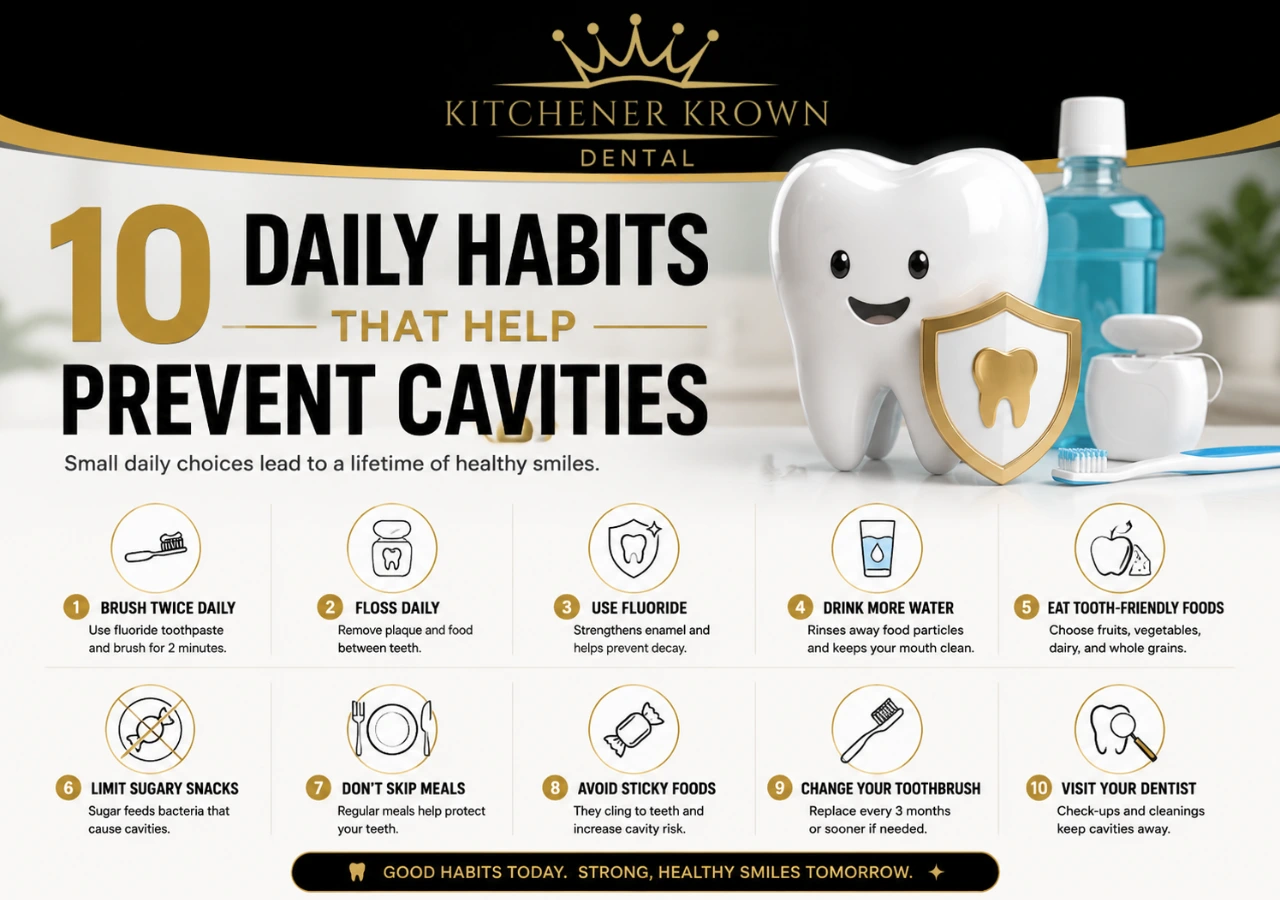
10 Daily Habits That Help Prevent Cavities
Preventive dentistry focuses on reducing risk before treatment becomes necessary.
These evidence-based habits help patients of all ages maintain healthier smiles.
1. Brush Twice Every Day
Brush for two full minutes using fluoride toothpaste, a routine recommended by the American Dental Association (ADA).
Electric toothbrushes often improve plaque removal, especially around the gumline.
2. Floss Every Evening
Nearly one-third of each tooth cannot be cleaned with brushing alone.
In fact, daily flossing removes plaque between teeth where many cavities begin.
3. Use Fluoride Toothpaste
Specifically, fluoride strengthens enamel and encourages remineralization.
Indeed, it remains one of the most effective ways to prevent cavities according to decades of clinical research.
4. Drink More Water
Water helps rinse away food particles while encouraging healthy saliva production.
Additionally, if your community water supply contains fluoride, it provides additional protection against tooth decay.
5. Limit Frequent Snacking
Each sugary snack creates an acid attack lasting approximately 20–30 minutes.
Therefore, reducing snack frequency gives enamel time to recover naturally.
6. Choose Tooth-Friendly Foods
Foods that support oral health include:
-
- Cheese
-
- Plain yogurt
-
- Leafy greens
-
- Nuts
-
- Apples
-
- Carrots
These foods stimulate saliva while providing important minerals.
7. Reduce Sugary Drinks
For example, replacing soft drinks with water significantly lowers acid exposure.
If consuming sweet beverages, try limiting them to mealtimes rather than sipping throughout the day.
8. Replace Your Toothbrush Regularly
Additionally, a worn toothbrush removes less plaque.
Replace your toothbrush—or electric brush head—every three months or sooner if the bristles become frayed.
9. Wear a Night Guard if Recommended
Similarly, grinding your teeth weakens enamel, making teeth more vulnerable to wear and bacterial damage.
Patients with bruxism may benefit from a professionally fitted night guard to protect their teeth.
10. Visit Your Dentist Regularly
Ultimately, routine examinations remain one of the most effective strategies for preventing extensive dental treatment.
In addition, professional cleanings remove hardened plaque (tartar) that cannot be eliminated with brushing alone.
Digital X-rays also help identify hidden decay between teeth before symptoms develop.
Why Early Detection Matters
Knowing what do cavities look like before they progress is one of the greatest advantages of modern dentistry, since many cavities can be treated before they become painful.
When decay is diagnosed early, treatment is typically:
-
- Less invasive
-
- More affordable
-
- Faster to complete
-
- Better at preserving natural tooth structure
In our preventive approach at Kitchener Krown Dental, we emphasize patient education alongside regular examinations because informed patients are more likely to recognize subtle changes and seek care before minor issues become major concerns.
Research published by the World Health Organization (WHO) estimates that oral diseases affect approximately 3.5 billion people worldwide, with untreated dental caries remaining among the most prevalent health conditions globally. This highlights the importance of prevention, early diagnosis, and consistent oral hygiene habits as the foundation of lifelong oral health.
Conclusion
Knowing what do cavities look like can make the difference between a simple preventive treatment and more extensive dental care. From early white spots to visible holes and tooth pain, cavities develop gradually—but they rarely improve without intervention. By understanding what causes cavities, recognizing the earliest signs of tooth decay and cavities, and adopting consistent daily habits, you can protect your smile for years to come.
At Kitchener Krown Dental, we believe prevention is the most effective treatment. Regular dental examinations, professional cleanings, and personalized oral health advice help patients of all ages maintain strong, healthy teeth while reducing the need for complex restorative procedures. Good oral hygiene habits, supported by resources like Health Canada, remain the foundation of a lifetime of healthy smiles.