A damaged tooth rarely breaks without warning. In most cases, your teeth provide subtle signs that something is wrong long before a serious fracture occurs. Recognising these symptoms early can help you avoid pain, complex treatments, and unexpected dental expenses.
Dental crowns are one of the most effective restorative dentistry solutions available today. They strengthen weakened teeth, restore function, improve appearance, and help prevent further damage. Yet many people wait until a tooth cracks or breaks before seeking treatment.
If you’ve been wondering whether a damaged tooth needs attention, this guide explains the seven most common signs that may indicate you need a dental crown before your tooth breaks.
What Are Dental Crowns?
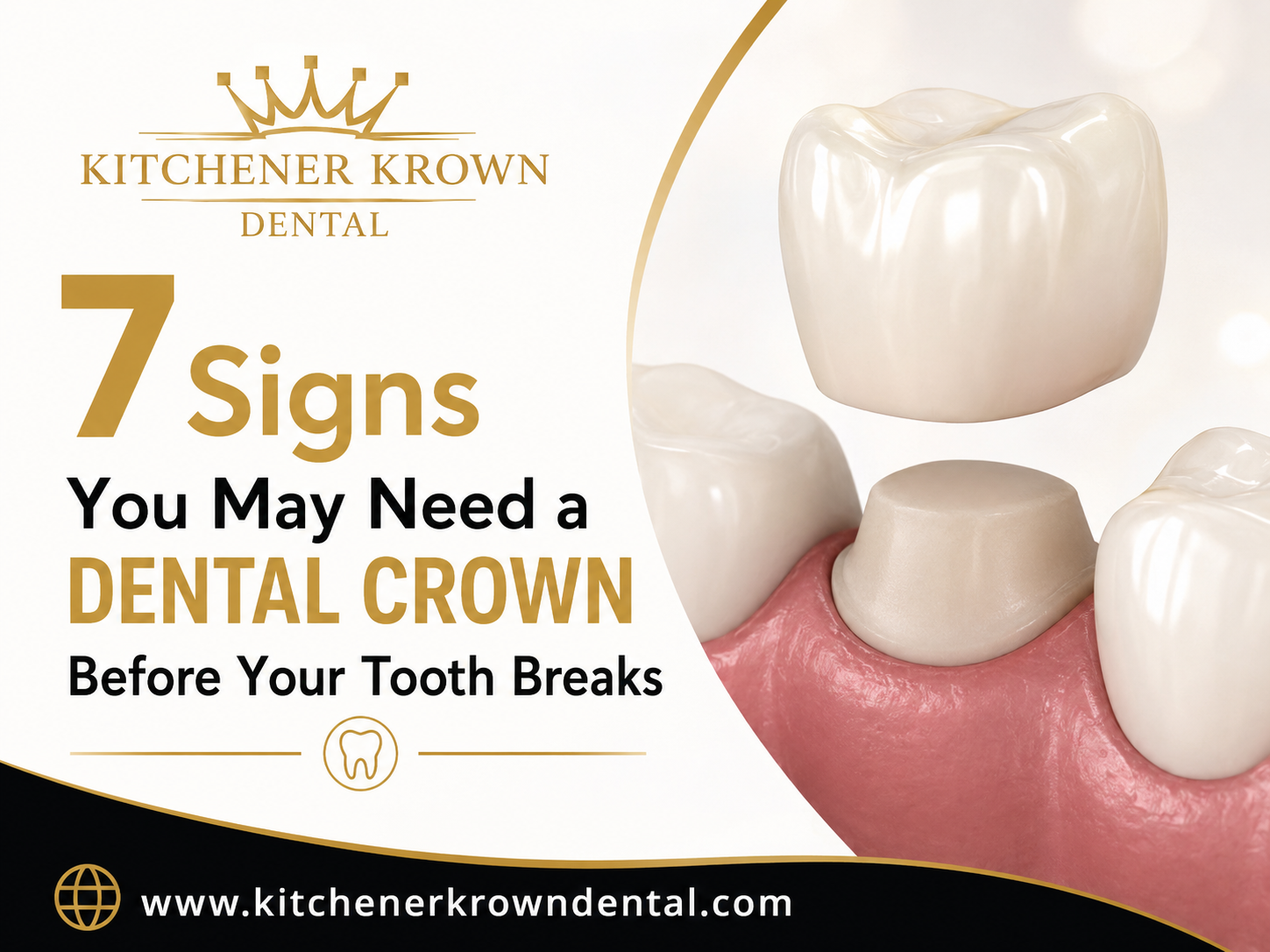
A dental crown is a custom-made cap placed over a damaged, weakened, or heavily restored tooth. It covers the visible portion of the tooth above the gum line, restoring its shape, size, strength, and appearance.
Modern dental crowns can be made from porcelain, ceramic, zirconia, metal alloys, or a combination of materials. They are designed to blend naturally with your smile while providing long-term protection. Learn more about our dental crown and bridge treatments in Kitchener.
Common Reasons Dentists Recommend Dental Crowns
- Protecting cracked teeth
- Restoring severely worn teeth
- Covering large fillings
- Strengthening root canal-treated teeth
- Repairing broken teeth
- Improving cosmetic appearance through cosmetic dentistry
- Supporting dental bridges
- Covering dental implants
1. You Feel Pain When Biting or Chewing
One of the earliest signs of a weakened tooth is discomfort when chewing.
If you experience pain when biting down on food or releasing pressure after chewing, it may indicate:
-
- A cracked tooth
-
- Structural damage
-
- Deep decay
-
- A weakened tooth cusp
The problem may seem minor at first, but repeated chewing forces can worsen the damage over time. If pain persists, our emergency dentist in Kitchener can evaluate the tooth promptly.
Why a Crown May Help
A dental crown distributes biting forces evenly across the tooth. This reinforcement reduces stress on weakened areas and helps prevent further cracking.
Questions People Often Ask
-
- Why does my tooth hurt when I chew?
-
- Can a cracked tooth heal on its own?
-
- Do I need a crown if my tooth only hurts occasionally?
-
- What happens if I ignore tooth pain while eating?
2. Your Tooth Has a Large Filling
Large fillings are often effective for treating cavities, but they can weaken the remaining natural tooth structure.
When more than half of a tooth has been restored with a filling, the tooth may become vulnerable to:
-
- Cracks
-
- Fractures
-
- Wear
-
- Structural failure
Over time, repeated pressure from chewing can cause the tooth walls around the filling to break.
Why Dentists Recommend Crowns for Large Fillings
A crown surrounds and protects the remaining tooth structure. Instead of relying solely on the filling, the entire tooth receives support. Our restorative dental care team in Kitchener assesses each case individually to determine when a crown becomes necessary.
Signs Your Large Filling May Need Additional Protection
-
- Sensitivity around the filling
-
- Visible cracks
-
- Food getting trapped
-
- Darkening around restoration edges
-
- Chipped tooth structure
3. You Notice Visible Cracks in Your Tooth
A crack may appear harmless, but it often indicates that the tooth is under stress.
Cracks can develop from:
-
- Teeth grinding
-
- Trauma
-
- Chewing hard foods
-
- Age-related wear
-
- Previous dental work
Some cracks remain superficial, while others extend deeper into the tooth.
Warning Signs of a Cracked Tooth
-
- Sharp pain while chewing
-
- Sensitivity to temperature
-
- Intermittent discomfort
-
- Visible lines on the tooth surface
-
- Pain when releasing bite pressure
Why Early Treatment Matters
Small cracks can grow larger over time. Once a crack extends below the gum line, saving the tooth becomes much more difficult. A dental crown can stabilise the tooth and reduce the risk of complete fracture. According to the American Dental Association (ADA), early evaluation and timely restoration are key to preserving cracked or weakened teeth.
4. Your Tooth Is Worn Down
Tooth wear often develops gradually and may go unnoticed for years.
Common causes include:
-
- Bruxism (teeth grinding)
-
- Clenching
-
- Acid erosion
-
- Aggressive brushing
-
- Long-term wear
Signs of Excessive Tooth Wear
-
- Flattened chewing surfaces
-
- Shorter-looking teeth
-
- Increased sensitivity
-
- Chipping around edges
-
- Jaw discomfort
As enamel wears away, the inner tooth structure becomes more vulnerable to damage.
How Dental Crowns Restore Worn Teeth
Crowns rebuild lost tooth structure while protecting remaining healthy tissue. They restore proper bite alignment and improve chewing efficiency. Our family dentistry team at Kitchener Krown Dental can assess bruxism-related wear and recommend appropriate restorative solutions.
Related Questions
-
- Can worn teeth be restored?
-
- How do dentists fix teeth grinding damage?
-
- Are crowns better than veneers for worn teeth?
5. You Recently Had a Root Canal
A tooth that has undergone root canal therapy often becomes more brittle over time.
Although the infection is removed, the tooth no longer receives nourishment from its internal nerve tissue.
As a result, root canal-treated teeth are more susceptible to:
-
- Cracking
-
- Chipping
-
- Fracture
Why Crowns Are Common After Root Canal Treatment
A dental crown acts as a protective shield. Without reinforcement, chewing pressure can cause the weakened tooth to fracture unexpectedly.
Many dentists recommend crowns on molars and premolars following root canal treatment in Kitchener because these teeth absorb significant chewing forces.
Frequently Asked Questions
-
- Do all root canal teeth need crowns?
-
- How long can a root canal tooth last without a crown?
-
- What happens if I delay getting a crown?
6. Your Tooth Has Repeatedly Chipped
A tooth that chips more than once is often signalling structural weakness.
Even small chips can indicate that the enamel has been compromised.
Common Causes of Repeated Chipping
-
- Thin enamel
-
- Previous restorations
-
- Bite misalignment
-
- Teeth grinding
-
- Existing cracks
While bonding may repair minor chips temporarily, repeated damage often requires a stronger solution.
Why Crowns Are Often the Better Long-Term Option
Dental crowns provide complete coverage and reinforcement. Instead of repeatedly repairing individual chips, a crown protects the entire tooth from future damage. Our cosmetic dentistry and restorative team can recommend the most appropriate approach for your specific situation.
Questions Patients Commonly Search
-
- Why does my tooth keep chipping?
-
- Can bonding fix a chipped tooth permanently?
-
- When is a crown better than dental bonding?
7. You Have Severe Tooth Sensitivity
Sensitivity can occur for many reasons, but persistent discomfort may indicate a weakened tooth.
Sensitivity Triggers
-
- Hot drinks
-
- Cold beverages
-
- Sweet foods
-
- Air exposure
-
- Chewing pressure
When enamel becomes compromised, the inner dentin layer becomes exposed, leading to discomfort.
When Sensitivity May Indicate the Need for a Crown
If sensitivity is accompanied by cracks, large fillings, structural damage, or tooth wear, a crown may be recommended to provide long-term protection. Schedule a dental exam and cleaning in Kitchener to have persistent sensitivity properly evaluated.
Benefits of Crown Coverage
-
- Reduced sensitivity
-
- Improved comfort
-
- Better chewing function
-
- Protection from future damage
What Happens If You Delay Getting a Dental Crown?
Many people postpone treatment because the tooth is not causing significant pain.
Unfortunately, damaged teeth rarely improve on their own.
Without treatment, a weakened tooth may:
-
- Crack further
-
- Break unexpectedly
-
- Develop infection
-
- Require root canal treatment
-
- Need extraction
Addressing the issue early is usually simpler, less invasive, and more cost-effective. According to Health Canada, prompt dental treatment plays a critical role in maintaining long-term oral health outcomes across the population.
Benefits of Getting Dental Crowns Early
When placed before a tooth breaks, dental crowns offer several advantages:
Preserve Natural Tooth Structure
Early intervention helps save more of your natural tooth.
Prevent Costly Dental Emergencies
A preventive crown is often less complicated than treating a fractured tooth. If you do experience a dental emergency, our emergency dentistry team in Kitchener is available to help.
Improve Appearance
Modern ceramic and zirconia crowns closely resemble natural teeth. Combined with our cosmetic dentistry services, a crown can significantly enhance your smile.
Restore Full Function
Crowns allow comfortable chewing and speaking.
Long-Term Durability
With proper care, many crowns last 10–15 years or longer.
How Dentists Determine Whether You Need a Crown
A comprehensive dental examination may include:
-
- Visual inspection
-
- Digital X-rays
-
- Bite evaluation
-
- Crack detection tests
-
- Assessment of existing restorations
The recommendation depends on the amount of remaining healthy tooth structure and the overall condition of the tooth.
At Kitchener Krown Dental, patients receive personalised evaluations to determine whether a dental crown is the most effective treatment option for preserving long-term oral health.
Dental Crowns vs Fillings: Which Is Better?
| Situation | Filling | Dental Crown |
|---|---|---|
| Small cavity | ✓ | |
| Minor damage | ✓ | |
| Large filling replacement | ✓ | |
| Cracked tooth | ✓ | |
| Root canal-treated tooth | ✓ | |
| Severe wear | ✓ | |
| Broken tooth restoration | ✓ |
A filling restores a portion of the tooth, while a crown protects and strengthens the entire visible structure. For a deeper comparison, read our guide on dental crowns and bridges or speak with our restorative dentistry team.
Dental Crown Materials Explained
Not all crowns are identical. Your dentist will recommend the most appropriate material based on the tooth’s location and your treatment goals.
Porcelain Crowns
Popular for front teeth because of their natural appearance.
Zirconia Crowns
Known for exceptional strength and durability, making them ideal for back teeth under high chewing pressure.
Ceramic Crowns
Offer excellent aesthetics and biocompatibility for patients with metal sensitivities.
Porcelain-Fused-to-Metal Crowns
Combine strength and aesthetics, offering a balance of durability and natural appearance.
How to Prevent Future Restorations
Whether you currently need a filling or dental crown, preventive care remains essential. The American Dental Association (ADA) recommends the following daily habits to protect your teeth:
Brush Twice Daily
Use fluoride toothpaste and proper brushing techniques.
Floss Every Day
Flossing removes plaque between teeth where cavities often begin.
Limit Sugary Foods
Reducing sugar consumption helps prevent tooth decay.
Schedule Routine Dental Visits
Regular examinations identify issues before they become serious. Book a professional teeth cleaning in Kitchener to stay ahead of potential problems.
Wear a Night Guard
Patients who grind their teeth can protect restorations and natural teeth with a custom night guard from our family dentistry clinic.
Address Problems Early
Small cavities are easier and less expensive to treat than advanced decay. Early intervention also preserves more natural tooth structure and reduces treatment complexity. As noted by Health Canada, regular dental visits and prompt treatment play a key role in maintaining long-term oral health.
Building a Healthier Smile Through Early Action
The best time to protect a damaged tooth is before it breaks.
Whether you’re experiencing chewing pain, noticing cracks, dealing with recurring chips, or managing a heavily restored tooth, recognising these warning signs early can help prevent more extensive treatment later.
Dental crowns remain one of the most reliable solutions for restoring strength, function, and confidence in your smile. By addressing structural issues before they become emergencies, you can preserve your natural teeth and maintain better oral health for years to come. For broader oral health guidance, the Canadian Dental Association (CDA) provides trusted resources on restorative dentistry and preventive care.
At Kitchener Krown Dental, our comprehensive restorative dentistry services are tailored to each patient’s unique oral health needs. Contact us today to schedule your personalised evaluation.
Frequently Asked Questions (FAQs)
How do I know if I need a dental crown?
Common signs include cracked teeth, large fillings, repeated chipping, chewing pain, severe wear, root canal treatment, and ongoing sensitivity. A thorough evaluation at Kitchener Krown Dental can confirm whether a crown is the right solution.Can a dental crown prevent a tooth from breaking?
Yes. A dental crown reinforces weakened tooth structure and significantly reduces the risk of fractures.Are dental crowns painful?
The procedure is generally comfortable. Local anaesthesia is used to ensure minimal discomfort during treatment.How long do dental crowns last?
Most dental crowns last between 10 and 15 years, though many can last longer with proper oral hygiene and regular dental visits.Is a crown better than a filling?
For extensive damage or weakened tooth structure, a crown typically provides greater protection and durability than a filling. Learn more in our guide on dental crowns and bridges.Can a cracked tooth be saved with a crown?
In many cases, yes. If the crack has not extended too deeply, a crown can stabilise and protect the tooth.What is the best material for dental crowns?
Porcelain, ceramic, and zirconia crowns are among the most popular choices because they combine durability with a natural appearance. Your dentist will recommend the best option based on the tooth’s location and condition.Does every root canal need a crown?
Many back teeth require crowns after root canal therapy because they experience substantial chewing pressure. Front teeth may not always require a crown, but your dentist will advise based on your specific case.What happens if I delay getting a crown?
Delaying treatment can increase the risk of tooth fractures, infection, root canal therapy, or tooth loss. If you’re concerned about a damaged tooth, our emergency dentistry team can assess the situation promptly.Where can I get a dental crown in Kitchener?
Kitchener Krown Dental offers comprehensive restorative dentistry services including dental crowns, fillings, and bridges at our clinic inside Frederick Mall, 385 Frederick Street, Kitchener. Book an appointment today.Final Thoughts
A tooth rarely breaks without warning. Paying attention to symptoms such as chewing pain, visible cracks, repeated chipping, large fillings, excessive wear, root canal history, or ongoing sensitivity can help you seek treatment before a dental emergency occurs. If you notice any of these signs, consulting an experienced dental professional can help determine whether a dental crown is the right solution to protect your smile and preserve your natural tooth for the future.
At Kitchener Krown Dental, our team is here to help you make the right decision for your oral health. Book your appointment today and take the first step toward a stronger, healthier smile.