Emergency dental treatment is appropriate when pain, swelling, bleeding, infection, or tooth damage could worsen without prompt care. Severe toothache, facial swelling, a knocked-out permanent tooth, significant cracks or breaks, and uncontrolled bleeding deserve urgent assessment. Knowing the warning signs helps you act quickly, protect your natural teeth, and avoid preventable complications.
What Is Emergency Dental Treatment?
Emergency dental treatment is care for a dental problem that requires prompt assessment because delaying it could increase pain, infection, tissue damage, or the risk of losing a tooth. Common examples include severe toothache, dental abscesses, significant tooth fractures, dental trauma, uncontrolled oral bleeding, and knocked-out permanent teeth.
The important distinction is that not every uncomfortable dental problem is an emergency. A small cosmetic chip without pain may be suitable for a regular appointment, while a knocked-out adult tooth needs immediate attention.
At Kitchener Krown Dental, the dental team provides family and restorative care alongside emergency appointments. The safest approach is to judge a dental problem by its symptoms, severity, speed of progression, and potential to damage the tooth or surrounding tissues.
1. Severe Toothache: A Common Dental Emergency Sign
A severe toothache is one of the most common reasons people seek emergency dental treatment.
Pain may come from advanced tooth decay, inflammation of the dental pulp, infection, trauma, a cracked tooth, or a problem beneath an existing filling or crown.
Pay particular attention when tooth pain:
-
- Starts without an obvious trigger
-
- Wakes you during the night
-
- Gets progressively worse
-
- Hurts when you bite or chew
-
- Lingers after hot or cold foods
-
- Is accompanied by swelling or a bad taste
-
- Does not respond adequately to usual pain-relief measures
The Canadian Dental Association recommends contacting your dentist for toothache and specifically advises against placing pain medication directly on the sore tooth.
A Useful Rule
Pain that repeatedly returns is information. Pain that is becoming stronger is a reason to act.
Do not assume that pain disappearing means the tooth has healed. In some situations, a change in pain can occur as the tissue inside a severely damaged tooth deteriorates.
2. Facial, Jaw, or Gum Swelling: When You Need Emergency Dental Care
Swelling around a tooth, gum, cheek, or jaw can be a sign of infection.
A dental infection may develop when bacteria enter the pulp of a tooth or the surrounding tissues. Signs can include:
-
- Swollen gums
-
- A swollen cheek or jaw
-
- A pimple-like bump on the gum
-
- Pus or drainage
-
- A persistent bad taste
-
- Fever
-
- Increasing tenderness
Kitchener Krown Dental identifies swelling and persistent tooth symptoms among reasons patients should seek dental assessment. Its root canal service also lists swelling, abscesses, severe pain, and lingering sensitivity as symptoms that may require treatment.
If swelling is rapidly increasing or you have difficulty breathing or swallowing, seek emergency medical care rather than waiting for a routine dental appointment.
Those symptoms can indicate that an infection is extending beyond the immediate tooth area.
3. A Cracked Tooth Causes Sharp Pain When You Bite
A cracked tooth can be surprisingly difficult to diagnose at home.
You may experience a sharp sensation when biting down, pain when releasing your bite, sensitivity to temperature, or intermittent discomfort that seems to disappear between episodes.
The problem is that chewing places repeated forces on the tooth. A crack that begins relatively small can progress and involve deeper tooth structures.
Treatment depends on factors such as:
-
- Where the crack is located
-
- How deep it extends
-
- Whether the pulp is affected
-
- How much healthy tooth structure remains
-
- Whether the tooth can be predictably restored
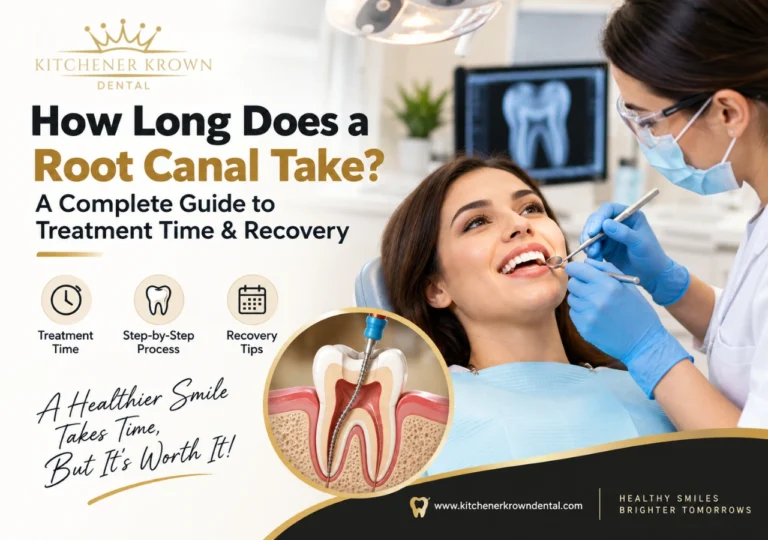
Potential treatment can include bonding or another restoration, a crown, emergency root canal treatment when the pulp is affected, or extraction when the tooth cannot be saved.
Until you are assessed, avoid chewing hard foods on the affected side.
4. A Broken or Chipped Tooth: A Dental Emergency, Not Just a Cosmetic Problem
A small chip without pain may not require emergency care. A significant broken tooth, however, deserves prompt assessment—particularly when there is bleeding, severe sensitivity, or pain.
A fracture can expose the inner portion of the tooth and make it more vulnerable to bacterial contamination and further structural damage.
The Ontario Dental Association recommends contacting a dentist promptly after a significant broken or chipped tooth and advises patients to bring any recovered tooth fragment to the appointment.
Depending on the injury, a dentist may recommend:
-
- A tooth-coloured filling or bonding
-
- A larger restoration
-
- A dental crown
-
- Root canal treatment
-
- Extraction if the tooth is not restorable
Kitchener Krown Dental provides restorative services including fillings, crowns, bridges, and other treatments for damaged teeth.
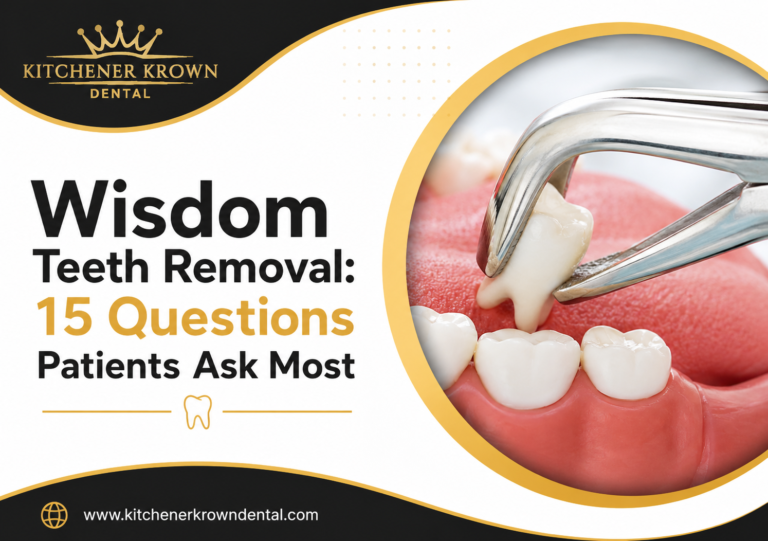
5. A Knocked-Out Permanent Tooth: A Time-Sensitive Dental Emergency
A knocked-out permanent tooth is one of the clearest dental emergencies.
The goal is to get professional care as quickly as possible because the time outside the mouth can affect the possibility of successfully repositioning the tooth.
If an adult tooth is knocked out:
-
- Pick it up by the crown, not the root.
-
- If it is dirty, gently rinse it with cool water.
-
- Do not scrub the root.
-
- Follow professional guidance about repositioning it.
-
- If it cannot be safely repositioned, keep it moist.
-
- Contact a dentist or seek dental care immediately.
The Ontario Dental Association notes that a permanent tooth may be replanted and that acting quickly is important. It also advises never attempting to reinsert a knocked-out baby tooth, because doing so can damage the developing permanent tooth.
Adult Tooth vs. Baby Tooth
-
- Permanent tooth: seek immediate dental care.
-
- Baby tooth: do not put it back into the socket; contact a dentist promptly for guidance.
This is an important distinction for parents.
6. Uncontrolled Oral Bleeding: A Dental Emergency That Needs Urgent Care
Bleeding can occur after an injury, tooth extraction, or other dental problem.
A small amount of bleeding may be expected in some circumstances. Persistent or heavy bleeding is different.
Until you receive professional advice, apply firm, gentle pressure with clean gauze or cloth. Avoid repeatedly removing the material to check whether the bleeding has stopped.
Seek urgent professional assistance if bleeding remains uncontrolled.
If the bleeding follows major facial trauma, a significant head injury, fainting, or another serious injury, medical emergency care may be more appropriate.
7. A Dental Abscess: A Serious Dental Emergency With Pus or a Bad Taste
A dental abscess is a localized collection of infection associated with a tooth or surrounding tissues.
Possible warning signs include:
-
- Pus
-
- A recurring gum bump
-
- A bad or metallic taste
-
- Swelling
-
- Throbbing pain
-
- Tenderness when biting
-
- Fever
-
- Swollen glands
One of the most important misconceptions about an abscess is that less pain does not necessarily mean the infection is gone.
If pressure is released and drainage occurs, pain may temporarily decrease while the underlying source remains.
Treatment depends on the diagnosis. Depending on the tooth and extent of infection, a dentist may recommend drainage, root canal treatment, restoration, or extraction.
Antibiotics may be appropriate in certain situations, but they do not automatically eliminate the dental source of an infection. The underlying tooth or tissue still needs appropriate dental assessment.
8. Severe Sensitivity to Hot or Cold Lingers
Not all sensitivity means you need emergency dental treatment.
Brief sensitivity that disappears immediately can have relatively different causes from pain that continues after the hot or cold stimulus is gone.
Lingering sensitivity can be associated with:
-
- Tooth decay
-
- Pulp inflammation
-
- A cracked tooth
-
- Worn enamel
-
- Gum recession
-
- A defective restoration
Kitchener Krown Dental lists lingering hot or cold sensitivity among symptoms that can warrant an endodontic assessment.
If sensitivity is becoming more frequent, more intense, or is accompanied by spontaneous pain, do not simply keep avoiding the foods that trigger it. Find out why the tooth is reacting.
9. A Loose Permanent Tooth: Another Dental Emergency After Trauma
A loose adult tooth following a fall, collision, sports injury, or blow to the mouth needs dental assessment.
The tooth may look intact from the outside while the tissues supporting it have been injured.
A dentist can assess the tooth, surrounding tissues, bite, and—when appropriate—use imaging to determine the extent of the injury.
The Ontario Dental Association describes a loose permanent tooth as a serious problem that should be assessed by a dentist.
For families, this is another reason children participating in contact sports should use an appropriately fitted mouthguard.
10. Severe Pain or Swelling After Treatment: Call Your Emergency Dentist
Some tenderness after dental treatment can be normal. Severe, worsening, or unexpected symptoms deserve a call to your dental office.
Contact your dentist if you experience:
-
- Severe pain that is increasing rather than improving
-
- New or increasing swelling
-
- Persistent bleeding
-
- A restoration that has fallen out
-
- A tooth that feels significantly different after treatment
-
- Fever or other signs of infection
Do not try to diagnose a post-treatment complication yourself.
Your dentist can determine whether the symptoms are part of expected healing or whether additional treatment is necessary.
Emergency Dental Treatment vs. a Routine Dental Appointment
Knowing the difference can prevent both unnecessary delays and unnecessary emergency visits.
| Symptom | Recommended Response |
|---|---|
| Mild, occasional sensitivity | Book a dental examination |
| Small painless chip | Arrange a dental appointment |
| Persistent toothache | Contact a dentist promptly |
| Severe toothache | Seek urgent dental assessment |
| Cracked or significantly broken tooth | Prompt dental assessment |
| Facial swelling or suspected abscess | Urgent dental assessment |
| Knocked-out permanent tooth | Immediate dental care |
| Uncontrolled oral bleeding | Urgent dental/medical assessment |
| Difficulty breathing or swallowing with swelling | Emergency medical care |
When the symptom involves infection, trauma, rapidly worsening swelling, or significant pain, waiting several days “to see what happens” is generally not the safest strategy.
What Should You Do Before Seeing an Emergency Dentist?
The right first-aid step depends on the problem.
For Severe Tooth Pain
Contact a dentist and explain the symptoms. The Canadian Dental Association recommends an appropriate over-the-counter pain medicine if suitable for you and advises using an ice pack externally for toothache. Do not put medication directly on the tooth.
For Swelling
Use a cold compress externally. Avoid applying heat to the jaw; the Canadian Dental Association specifically warns against heat for dental pain and swelling.
For a Broken Tooth
Rinse gently with water, avoid chewing on the affected side, and keep any broken fragment to show your dentist.
For a Knocked-Out Permanent Tooth
Handle it by the crown, avoid scrubbing the root, keep it moist, and seek immediate professional care.
For an Abscess
Do not attempt to puncture or drain it yourself. Arrange urgent dental assessment.
What Happens During Emergency Dental Treatment?
An emergency appointment usually begins with a focused history and examination.
Your dentist may ask:
-
- When did the pain or injury begin?
-
- Did anything trigger it?
-
- Is the pain constant or intermittent?
-
- Does biting make it worse?
-
- Is there swelling or drainage?
-
- Has the tooth been previously treated?
-
- Was there an accident or sports injury?
The dentist may also perform diagnostic tests and take dental X-rays when clinically appropriate.
Kitchener Krown Dental states that its clinic uses digital X-rays and provides restorative and endodontic treatment, including root canal care.
The immediate goal is to identify the cause, control the urgent problem, protect the tooth when possible, and establish a longer-term treatment plan.
General Oral Health Guidelines to Help Prevent Dental Emergencies
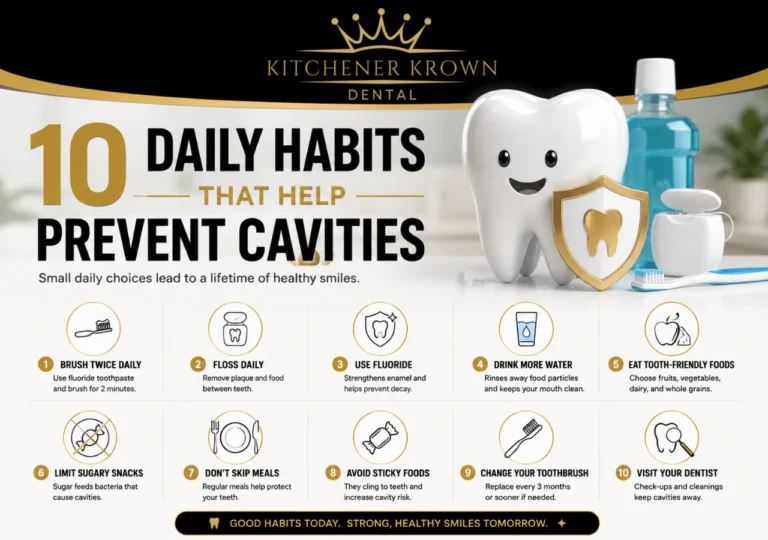
Many dental emergencies can be reduced through consistent preventive habits at home. Brushing twice daily with a soft-bristled toothbrush and fluoride toothpaste, a routine recommended by the American Dental Association (ADA), along with daily flossing, helps lower the risk of decay, infection, and gum disease that can lead to a dental emergency.
Broader oral health habits, as highlighted by Health Canada, combined with routine professional check-ups, can help catch small problems before they progress into painful, urgent situations.
Why Kitchener Patients Should Not Ignore Dental Emergency Warning Signs
Dental emergencies often begin with a symptom that seems manageable.
A little sensitivity becomes persistent pain. A small crack becomes a broken tooth. Mild gum swelling becomes an abscess.
That progression is why early assessment matters.
For patients and families in Kitchener, having an established dental home also means you already know who to call when something unexpected happens.
Kitchener Krown Dental provides family, preventive, restorative, and emergency dental care at its Frederick Mall location and states that it welcomes patients of all ages.
Frequently Asked Questions
What is considered a dental emergency?
Severe or persistent tooth pain, facial swelling, suspected dental infection, significant tooth fractures, uncontrolled bleeding, loose permanent teeth, and knocked-out permanent teeth can require urgent dental assessment.Is a severe toothache an emergency?
Severe or persistent tooth pain should be assessed promptly because it can result from deep decay, pulp inflammation, infection, trauma, or a cracked tooth.What should I do if my permanent tooth is knocked out?
Handle the tooth by its crown, not the root. Gently rinse it if necessary, keep it moist, and seek immediate dental care. Do not scrub the root.Can a cracked tooth heal by itself?
No. A cracked tooth cannot biologically repair itself like a broken bone. Treatment depends on the location and severity of the fracture.Does an abscess always cause severe pain?
No. An abscess may cause changing or even temporarily reduced pain while infection remains. Swelling, pus, a gum bump, bad taste, or fever should be assessed.When should I go to a hospital instead of a dentist?
Difficulty breathing or swallowing, rapidly increasing facial or neck swelling, severe uncontrolled bleeding, loss of consciousness, or major facial trauma can require emergency medical care.Final Thoughts
You do not need to diagnose your own tooth before calling a dentist.
If you have severe toothache, facial swelling, an abscess, significant bleeding, a cracked or broken tooth, a loose permanent tooth, or a knocked-out permanent tooth, contact a dental professional promptly.
The earlier the underlying problem is assessed, the more options may be available for protecting your oral health.