
Kitchener Krown Dental

kitchener veneers

Orthodontics
dental, Dental Tips & Care

How Orthodontic Treatment Improves More Than Just Your Smile

When most people hear the word orthodontics, they immediately think about straight teeth and a beautiful smile. While aesthetics are certainly one of the biggest benefits, orthodontic treatment goes far beyond cosmetic improvements. Properly aligned teeth and jaws contribute to better oral health, improved speech, easier chewing, healthier gums, increased confidence, and even better overall well-being. Today, modern orthodontics offers solutions for children, teenagers, and adults who want healthier teeth without compromising their lifestyle. Thanks to advances in clear aligners, ceramic braces, and digital treatment planning, achieving a healthier smile has never been more comfortable or discreet. If you’re wondering whether orthodontic treatment is worth the investment, this guide explains how it positively impacts nearly every aspect of your oral health and quality of life. What Is Orthodontics? Orthodontics is a specialized branch of dentistry focused on diagnosing, preventing, and correcting misaligned teeth and jaw irregularities. Common orthodontic problems include: Orthodontists use customized treatment plans that may include braces, clear aligners, retainers, or other appliances to gradually move teeth into healthier positions. Why Straight Teeth Matter More Than Appearance Many people postpone orthodontic treatment because they assume crooked teeth are only a cosmetic concern. In reality, poor tooth alignment can affect: Straight teeth are actually easier to maintain and help preserve your natural smile for decades. 1. Better Oral Hygiene One of the greatest health benefits of orthodontics is easier cleaning. Crowded or overlapping teeth create small spaces where plaque and bacteria accumulate. When brushing and flossing become difficult, people face a higher risk of: Properly aligned teeth allow toothbrush bristles and floss to reach every surface more effectively, reducing bacterial growth and improving long-term oral health. The American Dental Association (ADA) notes that consistent daily brushing and flossing habits are among the most effective ways to prevent plaque-related oral health problems. 2. Healthier Gums Healthy gums require clean teeth. When teeth overlap or rotate, plaque often builds below the gumline. Over time this can lead to: Orthodontic treatment creates proper spacing that allows gums to fit securely around each tooth, reducing inflammation and lowering the risk of advanced gum disease. 3. Lower Risk of Tooth Decay Crooked teeth naturally trap food particles. Even patients with excellent brushing habits may struggle to clean certain areas. Orthodontics helps reduce hidden plaque accumulation, lowering the likelihood of: Maintaining healthy teeth becomes significantly easier after alignment. Attending routine preventive care visits alongside orthodontic treatment helps catch early signs of decay before they progress. 4. Improved Bite Function Many people don’t realize they have bite problems until discomfort develops. Common bite issues include: Overbite Upper front teeth overlap excessively. Underbite Lower teeth extend beyond upper teeth. Crossbite Some upper teeth sit inside the lower teeth. Open Bite Front teeth don’t touch when biting. These problems can affect: Orthodontic treatment helps restore balanced bite function. 5. Less Jaw Pain and TMJ Stress Misaligned teeth often place unnecessary stress on the jaw joints. Some people experience: While orthodontics isn’t the solution for every TMJ disorder, correcting bite problems often reduces unnecessary strain on jaw muscles and joints. Many patients notice improved comfort after treatment. 6. Better Speech Your teeth play an important role in speech production. Poor tooth positioning may contribute to pronunciation difficulties involving sounds like: Correcting alignment can improve speech clarity and confidence, especially in younger patients whose speech is still developing. 7. Improved Chewing and Digestion Digestion begins in the mouth. Misaligned teeth may prevent food from being properly chewed before swallowing. Incomplete chewing can make digestion less efficient. A properly aligned bite allows food to be broken down more effectively, making eating more comfortable and supporting better digestive health. 8. Prevents Excessive Tooth Wear Uneven bites place excessive pressure on certain teeth. Over time this can cause: Orthodontic treatment distributes biting forces evenly across the entire mouth, helping preserve natural teeth. 9. Protects Teeth From Injury Protruding front teeth are more vulnerable during: Research consistently shows that children with significantly protruding front teeth have a greater risk of dental trauma. Correcting alignment helps protect teeth from future injuries. If an injury does occur, our emergency dentist services are available to provide prompt care. 10. Boosts Self-Confidence Perhaps the most noticeable benefit is increased confidence. Many people hide their smile because they feel embarrassed about: After orthodontic treatment, patients often report feeling more comfortable: Confidence can positively influence both personal and professional relationships. Patients who want to enhance their results further often pair orthodontic care with our cosmetic dentistry treatments for a complete smile transformation. Orthodontics Can Improve Mental Well-Being A healthy smile affects how people perceive themselves. Studies have found improvements in: Feeling confident about your smile often encourages better oral hygiene habits and regular dental visits. Health Canada highlights that good oral health is closely connected to overall physical and emotional wellness. Modern Orthodontic Treatment Options Today’s orthodontics offers more choices than ever before. Traditional Metal Braces Reliable and highly effective for correcting complex orthodontic issues. Best for: Ceramic Braces Ceramic braces function like metal braces but blend more naturally with tooth color. Benefits include: Clear Aligners Clear aligners have become increasingly popular. Advantages include: They work well for many mild to moderate orthodontic cases. Learn more about our Invisalign treatment in Kitchener if you’re considering a discreet, removable option. Retainers Retainers help maintain results after orthodontic treatment. Without retainers, teeth naturally tend to shift over time. Consistent retainer wear protects your investment. Who Can Benefit From Orthodontics? Orthodontic treatment isn’t only for teenagers. Adults of all ages are choosing treatment to improve both oral health and appearance. Ideal candidates include: Age alone is rarely a barrier. Signs You May Need Orthodontic Treatment You may benefit from orthodontics if you notice: A professional evaluation can determine the best treatment approach. How Long Does Orthodontic Treatment Take? Treatment varies depending on the complexity of each case. Average timelines include: Treatment Type Average Duration Minor alignment 6–12 months Moderate correction 12–18 months Comprehensive braces 18–24 months Complex bite correction 24–30 months Following
Dental Implants
dental, Dental Tips & Care

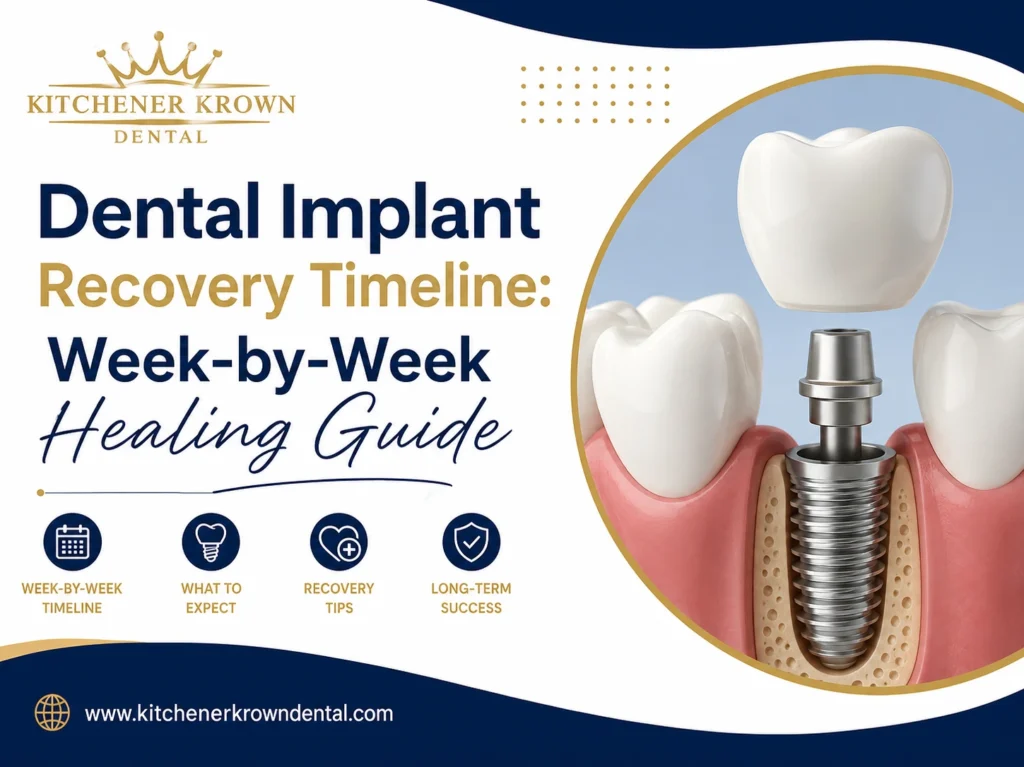
Dental Implant Recovery Timeline: Week-by-Week Healing Guide

Dental implants are one of the most reliable and long-lasting solutions for replacing missing teeth. They restore your smile, improve chewing ability, and help preserve your jawbone. While the procedure itself is highly predictable, many patients ask the same question: “How long does it take to recover from dental implant surgery?” The answer depends on several factors, including your overall health, the number of implants placed, whether bone grafting was needed, and how closely you follow your dentist’s aftercare instructions. Although every patient’s healing journey is unique, most people experience a similar recovery timeline. Knowing what to expect can help you feel more confident, reduce anxiety, and support a smooth recovery. This comprehensive week-by-week guide explains the typical healing process after dental implant surgery, common symptoms, recovery tips, and signs that indicate it’s time to contact your dentist. If you’re still exploring your options, you can learn more about our dental implant treatments in Kitchener before booking a consultation. Understanding Dental Implant Healing   A dental implant is a small titanium post surgically placed into the jawbone to replace a missing tooth root. Over the next several months, the implant gradually fuses with the surrounding bone through a natural process called osseointegration. Unlike dentures or dental bridges, dental implants become a permanent part of your jaw, providing exceptional stability and function. Successful healing involves several stages: Each phase is equally important for long-term success. Immediately After Surgery (First 24 Hours) The first day focuses on controlling bleeding and protecting the surgical site. What You May Experience These symptoms are completely normal. Recovery Tips Avoid disturbing the surgical site during the first day, as this allows the blood clot to stabilize. Week 1: Early Healing Begins During the first week, your body starts repairing the gum tissue surrounding the implant. What Is Normal? Most patients return to work within one to three days, depending on the complexity of the procedure. Best Foods During Week One Choose foods that require minimal chewing: Staying hydrated also supports faster healing. Week 2: Significant Improvement By the second week, most visible healing has occurred. Many patients notice: Any stitches that do not dissolve naturally may be removed during your follow-up appointment. Your dentist will examine the implant site to confirm that healing is progressing as expected. Weeks 3–4: Bone Healing Continues Although the gums may appear fully healed, the jawbone is still undergoing important changes beneath the surface. This stage is when osseointegration becomes more active. The titanium implant gradually bonds with the surrounding bone, creating a stable foundation for your future restoration. During This Stage Many patients mistakenly believe healing is complete because discomfort has disappeared. In reality, bone healing continues for several more months. Months 2–3: Osseointegration Progresses This is one of the most important stages of implant recovery. Your jawbone continues forming around the implant, creating a strong biological connection. You may feel completely normal, but the implant is still integrating with the bone. At this stage, your dentist may: Maintaining excellent oral hygiene is essential during this period. Brush gently around the implant and floss daily to reduce plaque buildup. Months 3–6: Final Healing For many patients, complete osseointegration occurs within three to six months. Once your dentist confirms that the implant is stable, the next steps include: At this point, your dental implant begins functioning like a natural tooth. Many patients also explore our dental bridges and crowns options when planning their final restoration. Factors That Affect Recovery Time No two patients heal at exactly the same rate. Several factors influence recovery, including: Overall Health Patients with well-managed medical conditions generally heal more predictably. Conditions such as uncontrolled diabetes may slow healing. Smoking Smoking significantly increases the risk of implant failure because it reduces blood flow and delays tissue regeneration. Stopping smoking before and after surgery greatly improves outcomes. Bone Quality Patients with strong jawbone density often experience smoother healing. If bone grafting is required, the recovery timeline may be longer. Oral Hygiene Keeping the implant area clean helps prevent infection and supports healthy gums. Following Post-Operative Instructions Simple habits like eating soft foods, taking medications, and attending follow-up visits contribute to successful healing. Foods to Eat During Recovery Nutrition plays a major role in tissue repair. Choose nutrient-rich soft foods such as: Protein, vitamin C, vitamin D, calcium, and zinc all support healing. Foods to Avoid Avoid foods that may disturb the implant site: Following these recommendations helps reduce irritation and promotes proper healing. Oral Hygiene During Recovery Good oral hygiene protects the implant from infection. Recommended routine: Once healing progresses, continue regular dental cleanings to maintain implant health. Booking routine teeth cleaning visits helps keep the surrounding gum tissue healthy long after surgery. Warning Signs You Shouldn’t Ignore While complications are uncommon, contact your dental provider immediately if you experience: Prompt treatment can often prevent more serious complications. If any of these symptoms occur outside of regular hours, our emergency dentist services are available to help right away. How to Speed Up Dental Implant Recovery You cannot rush bone healing, but you can support it. Helpful habits include: These steps improve the likelihood of long-term implant success. Long-Term Care for Dental Implants Once healing is complete, dental implants require maintenance similar to natural teeth. To keep them healthy: With proper care, dental implants can last for decades. The American Dental Association (ADA) notes that consistent home care combined with regular professional checkups plays a key role in the long-term success of implant restorations. Frequently Asked Questions About Dental Implant Recovery 1. How painful is dental implant recovery? Most patients report mild to moderate discomfort for a few days. Pain is typically well managed with prescribed or over-the-counter medication. 2. When can I return to work? Many people return within one to three days after a straightforward implant procedure. More complex cases may require additional recovery time. 3. How long does swelling last? Swelling usually peaks within the first 72 hours and improves significantly after one week. 4.

Dental Crowns
dental

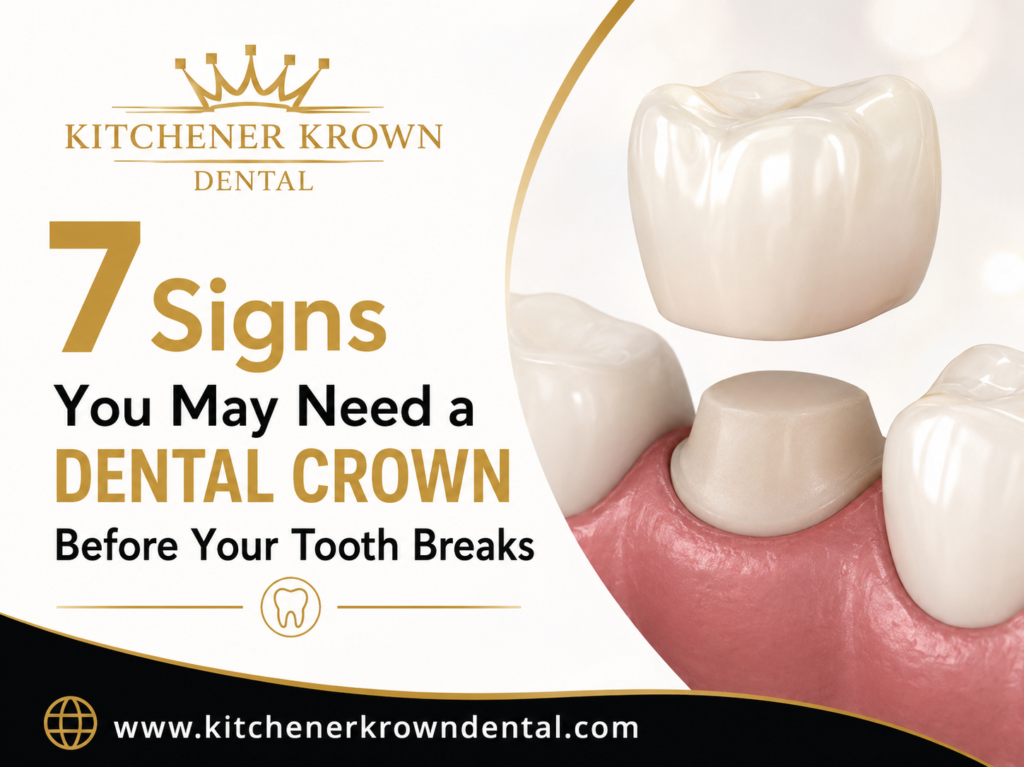
7 Signs You May Need a Dental Crown Before Your Tooth Breaks

A damaged tooth rarely breaks without warning. In most cases, your teeth provide subtle signs that something is wrong long before a serious fracture occurs. Recognising these symptoms early can help you avoid pain, complex treatments, and unexpected dental expenses. Dental crowns are one of the most effective restorative dentistry solutions available today. They strengthen weakened teeth, restore function, improve appearance, and help prevent further damage. Yet many people wait until a tooth cracks or breaks before seeking treatment. If you’ve been wondering whether a damaged tooth needs attention, this guide explains the seven most common signs that may indicate you need a dental crown before your tooth breaks. What Are Dental Crowns? A dental crown is a custom-made cap placed over a damaged, weakened, or heavily restored tooth. It covers the visible portion of the tooth above the gum line, restoring its shape, size, strength, and appearance. Modern dental crowns can be made from porcelain, ceramic, zirconia, metal alloys, or a combination of materials. They are designed to blend naturally with your smile while providing long-term protection. Learn more about our dental crown and bridge treatments in Kitchener. Common Reasons Dentists Recommend Dental Crowns Protecting cracked teeth Restoring severely worn teeth Covering large fillings Strengthening root canal-treated teeth Repairing broken teeth Improving cosmetic appearance through cosmetic dentistry Supporting dental bridges Covering dental implants 1. You Feel Pain When Biting or Chewing One of the earliest signs of a weakened tooth is discomfort when chewing. If you experience pain when biting down on food or releasing pressure after chewing, it may indicate: A cracked tooth Structural damage Deep decay A weakened tooth cusp The problem may seem minor at first, but repeated chewing forces can worsen the damage over time. If pain persists, our emergency dentist in Kitchener can evaluate the tooth promptly. Why a Crown May Help A dental crown distributes biting forces evenly across the tooth. This reinforcement reduces stress on weakened areas and helps prevent further cracking. Questions People Often Ask Why does my tooth hurt when I chew? Can a cracked tooth heal on its own? Do I need a crown if my tooth only hurts occasionally? What happens if I ignore tooth pain while eating? 2. Your Tooth Has a Large Filling Large fillings are often effective for treating cavities, but they can weaken the remaining natural tooth structure. When more than half of a tooth has been restored with a filling, the tooth may become vulnerable to: Cracks Fractures Wear Structural failure Over time, repeated pressure from chewing can cause the tooth walls around the filling to break. Why Dentists Recommend Crowns for Large Fillings A crown surrounds and protects the remaining tooth structure. Instead of relying solely on the filling, the entire tooth receives support. Our restorative dental care team in Kitchener assesses each case individually to determine when a crown becomes necessary. Signs Your Large Filling May Need Additional Protection Sensitivity around the filling Visible cracks Food getting trapped Darkening around restoration edges Chipped tooth structure 3. You Notice Visible Cracks in Your Tooth A crack may appear harmless, but it often indicates that the tooth is under stress. Cracks can develop from: Teeth grinding Trauma Chewing hard foods Age-related wear Previous dental work Some cracks remain superficial, while others extend deeper into the tooth. Warning Signs of a Cracked Tooth Sharp pain while chewing Sensitivity to temperature Intermittent discomfort Visible lines on the tooth surface Pain when releasing bite pressure Why Early Treatment Matters Small cracks can grow larger over time. Once a crack extends below the gum line, saving the tooth becomes much more difficult. A dental crown can stabilise the tooth and reduce the risk of complete fracture. According to the American Dental Association (ADA), early evaluation and timely restoration are key to preserving cracked or weakened teeth. 4. Your Tooth Is Worn Down Tooth wear often develops gradually and may go unnoticed for years. Common causes include: Bruxism (teeth grinding) Clenching Acid erosion Aggressive brushing Long-term wear Signs of Excessive Tooth Wear Flattened chewing surfaces Shorter-looking teeth Increased sensitivity Chipping around edges Jaw discomfort As enamel wears away, the inner tooth structure becomes more vulnerable to damage. How Dental Crowns Restore Worn Teeth Crowns rebuild lost tooth structure while protecting remaining healthy tissue. They restore proper bite alignment and improve chewing efficiency. Our family dentistry team at Kitchener Krown Dental can assess bruxism-related wear and recommend appropriate restorative solutions. Related Questions Can worn teeth be restored? How do dentists fix teeth grinding damage? Are crowns better than veneers for worn teeth? 5. You Recently Had a Root Canal A tooth that has undergone root canal therapy often becomes more brittle over time. Although the infection is removed, the tooth no longer receives nourishment from its internal nerve tissue. As a result, root canal-treated teeth are more susceptible to: Cracking Chipping Fracture Why Crowns Are Common After Root Canal Treatment A dental crown acts as a protective shield. Without reinforcement, chewing pressure can cause the weakened tooth to fracture unexpectedly. Many dentists recommend crowns on molars and premolars following root canal treatment in Kitchener because these teeth absorb significant chewing forces. Frequently Asked Questions Do all root canal teeth need crowns? How long can a root canal tooth last without a crown? What happens if I delay getting a crown? 6. Your Tooth Has Repeatedly Chipped A tooth that chips more than once is often signalling structural weakness. Even small chips can indicate that the enamel has been compromised. Common Causes of Repeated Chipping Thin enamel Previous restorations Bite misalignment Teeth grinding Existing cracks While bonding may repair minor chips temporarily, repeated damage often requires a stronger solution. Why Crowns Are Often the Better Long-Term Option Dental crowns provide complete coverage and reinforcement. Instead of repeatedly repairing individual chips, a crown protects the entire tooth from future damage. Our cosmetic dentistry and restorative team can recommend the most appropriate approach for your specific situation. Questions Patients Commonly Search

Scroll to Top