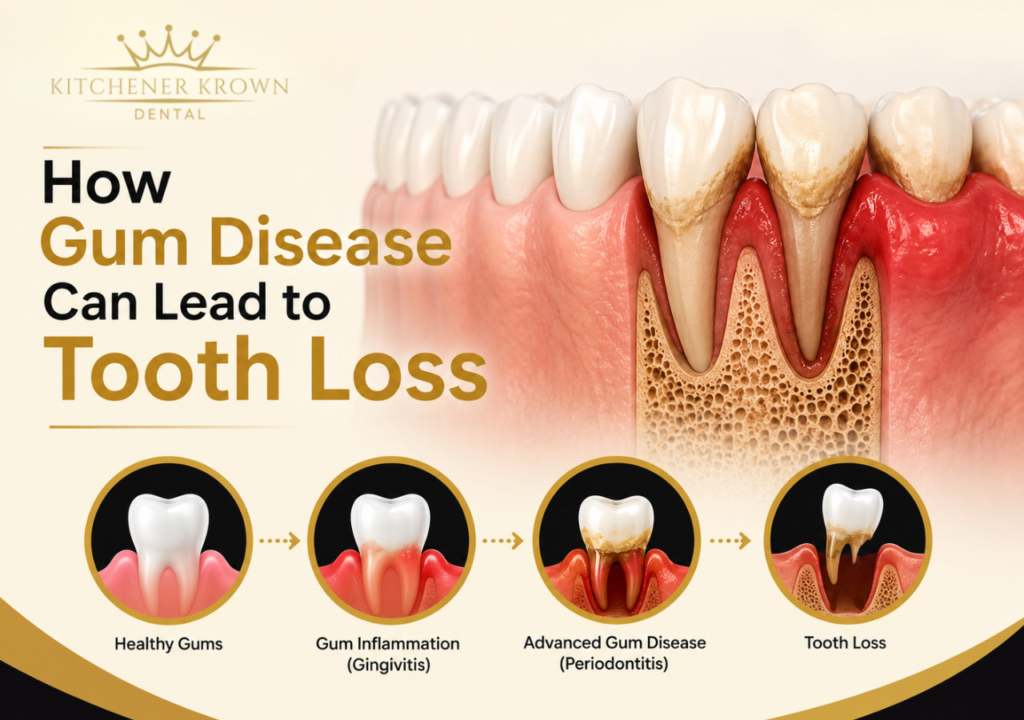
How Gum Disease Can Lead to Tooth Loss
Gum disease is more than a problem with bleeding or swollen gums. When it progresses to periodontitis, the infection and inflammation can damage the tissues and bone that support your teeth. As this support weakens, teeth may become loose and, in advanced cases, may be lost. The important point is that tooth loss is not an inevitable part of getting older. Early recognition, good daily oral care, and professional dental treatment can help manage periodontal problems and reduce the risk of losing teeth. Can Gum Disease Cause Tooth Loss? Yes. Advanced gum disease, particularly periodontitis, can damage the gums, periodontal tissues, and bone that hold teeth in place. As these supporting structures break down, teeth can become mobile and may eventually need to be removed or may fall out. The good news is that early gum disease can often be treated or reversed, while periodontitis can be managed to slow progression and protect the remaining supporting tissues. What Is Gum Disease? Gum disease is a broad term for conditions affecting the gums and other tissues around the teeth. It commonly begins when plaque, a sticky film containing bacteria, accumulates along the gumline. If plaque is not removed regularly, it can harden into tartar, also called calculus. Unlike plaque, tartar cannot be removed effectively with normal brushing and flossing. The tissues around the teeth may then become inflamed. The earliest stage is called gingivitis. Typical signs include red, swollen, or bleeding gums. Gingivitis does not necessarily cause pain, so it can be easy to overlook. If inflammation and infection progress, the condition can develop into periodontitis. At this stage, the tissues that attach the gums to the teeth and the bone supporting the teeth can be damaged. How Does Gum Disease Lead to Tooth Loss? Think of your teeth as being held in place by a support system rather than simply sitting inside the gums. The gums, periodontal ligament, and jawbone work together to provide stability. The progression can look like this: The Canadian Dental Association explains that as periodontal disease progresses, the infection can break down the attachment between the gums and teeth and the bone that holds teeth in place. What Does Gum Disease Look Like? Not everyone has obvious symptoms, especially during the early stages. In fact, the Canadian Dental Association notes that gum disease can develop slowly and without pain. Possible warning signs include: Bleeding gums should not simply be dismissed as normal. It can be a sign that the gum tissues are inflamed and deserve attention. If you notice several of these changes, a dental examination can help determine what is happening rather than relying on symptoms alone. What Is the Difference Between Gingivitis and Periodontitis? Gingivitis and periodontitis are related, but they are not the same condition. Gingivitis is the earlier form of periodontal disease. It involves inflammation of the gums and may cause redness, swelling, and bleeding. With appropriate care, gingivitis can often be reversed. Periodontitis is more advanced. It involves damage to the structures supporting the teeth, including attachment tissues and bone. The Centers for Disease Control and Prevention identifies periodontitis as a serious form of periodontal disease involving bone loss around teeth and notes that it is a leading cause of tooth loss. This distinction matters because symptoms alone may not tell you how much damage has occurred. A person can have relatively little discomfort while deeper supporting tissues are being affected. Why Can Teeth Become Loose? Healthy teeth are supported by surrounding tissues and bone. When periodontitis damages those structures, the foundation around a tooth may become weaker. A loose tooth can therefore be a sign that the supporting tissues need professional assessment. The American Dental Association describes periodontitis as a chronic infection that can destroy tooth-supporting structures and eventually contribute to tooth loss. A loose tooth does not automatically mean that it must be removed. The appropriate approach depends on factors such as the amount of supporting tissue remaining, the condition of the tooth, the extent of periodontal disease, and the person’s overall oral health. Can Gum Disease Be Treated Before You Lose a Tooth? Often, yes. Treatment depends on the stage and severity of the condition. For early gingivitis, improving daily plaque removal and receiving professional dental care may help the gums return to health. More advanced periodontitis may require more involved periodontal treatment to control infection and inflammation and maintain the tissues that remain. Treatment may include professional cleaning, cleaning below the gumline, improved home care, and other periodontal procedures when clinically indicated. The exact plan should be based on an examination. The goal is not simply to make the gums look better when managing gum disease. It is to control the disease and protect the structures that support the teeth. What Can Increase the Risk of Gum Problems? Several factors can influence a person’s risk of developing or experiencing more severe periodontal disease. Inconsistent Oral Hygiene Plaque is continuously forming on teeth. Brushing and cleaning between the teeth regularly helps reduce the bacterial buildup that contributes to inflammation. Smoking and Tobacco Use Smoking is an important risk factor for severe periodontal disease. The CDC explains that smoking can make it harder for the body to fight infection and can also make healing more difficult. Diabetes and Other Health Factors The CDC identifies diabetes among factors associated with serious periodontal disease. Individual risk varies, so people with medical conditions that may affect oral health should discuss appropriate dental care with their healthcare providers and dental professionals. Delaying Dental Care Because periodontal disease may progress without significant pain, waiting until symptoms become severe can allow damage to continue unnoticed. What Does Gum Disease Feel Like? There is no single feeling that confirms a periodontal problem. Early inflammation may cause bleeding or tenderness, while more advanced disease may cause gum recession, sensitivity, chewing discomfort, or loose teeth. Some people may have few noticeable symptoms. That is why a dental examination matters. A dentist can assess the gums and supporting