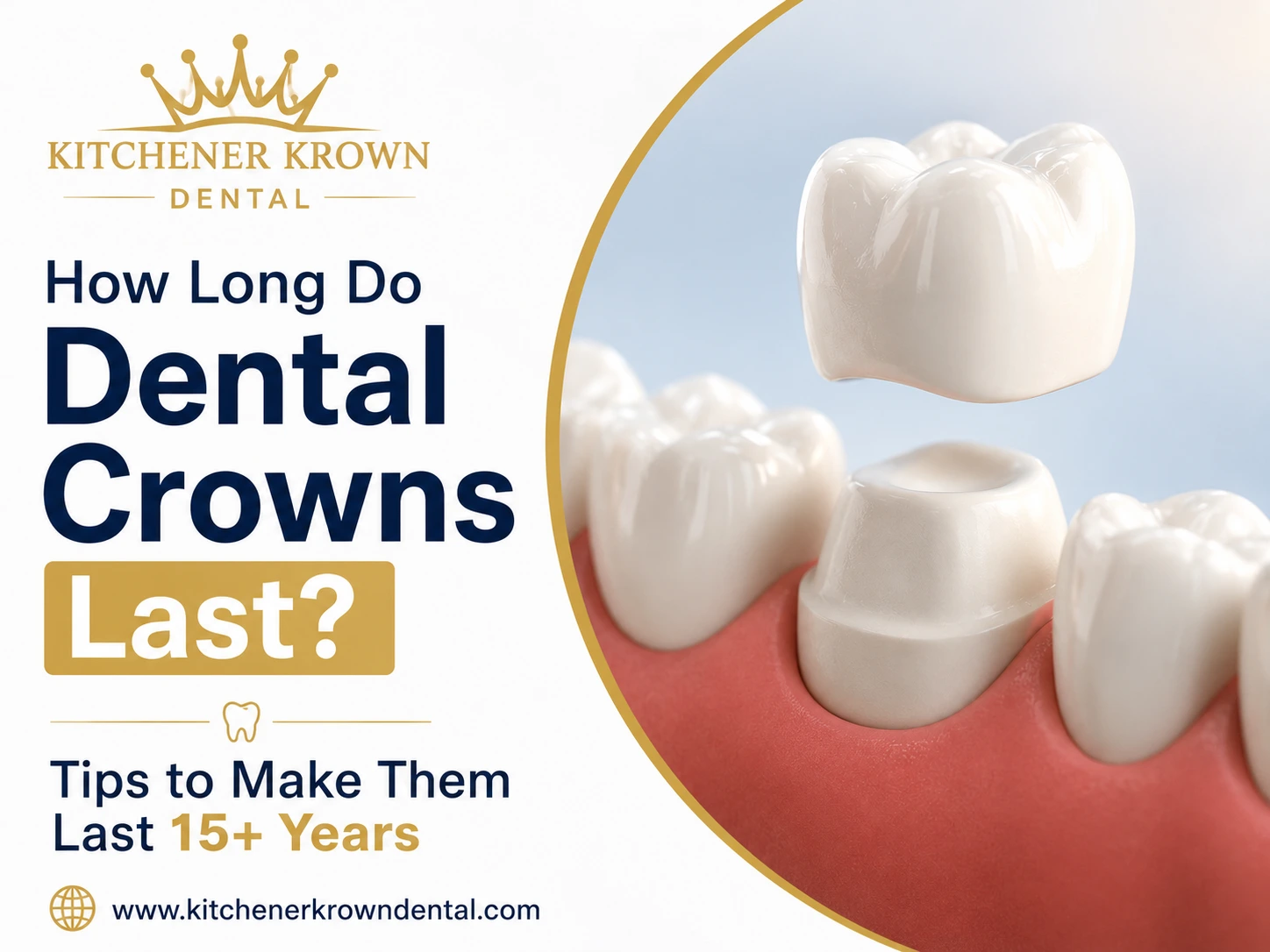
Most dental crowns last between 10 and 15 years, but many can remain strong and functional for 20 years or longer with proper care. Factors such as crown material, oral hygiene, teeth grinding, diet, and regular dental visits all play a role in determining how long a crown will last.
For patients in Kitchener, Waterloo, Cambridge, and across Ontario, one of the most common questions after treatment is: “How long will my dental crown last before I need a replacement?”
The good news is that modern dental crowns are designed to be durable and long-lasting. With healthy habits and preventive care, many patients enjoy decades of protection from a single crown.
What Is a Dental Crown?
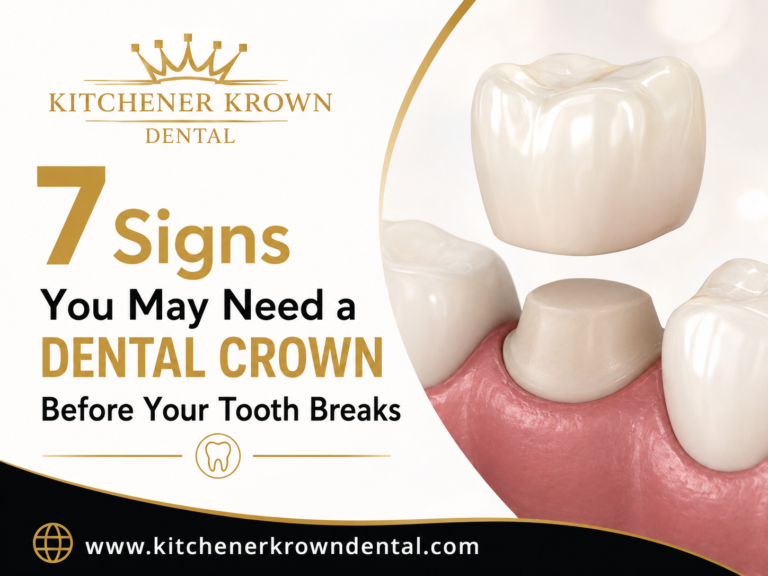
A dental crown is a custom-made cap placed over a damaged, weakened, cracked, or heavily restored tooth. It restores strength, function, and appearance while protecting the remaining natural tooth from further damage.
Dentists commonly recommend dental crowns for:
-
- Cracked teeth
-
- Large cavities
-
- Broken teeth
-
- Root canal-treated teeth
-
- Severely worn teeth
-
- Cosmetic improvements
-
- Teeth with large fillings
By covering the entire visible portion of the tooth, a crown helps preserve natural tooth structure and restore normal chewing function. Learn more about our dental crown and bridge treatments at Kitchener Krown Dental.
How Long Do Dental Crowns Last?
Most dental crowns last between 10 and 15 years, although many patients keep their crowns for 20 years or longer.
Research in restorative dentistry has shown that crown survival rates remain high after 10 years when patients maintain good oral hygiene and attend regular dental visits.
At Kitchener Krown Dental, we often see crowns lasting well beyond their expected lifespan when patients follow preventive care recommendations and address dental concerns early.
The longevity of a crown depends on:
-
- Crown material
-
- Oral hygiene habits
-
- Gum health
-
- Bite alignment
-
- Teeth grinding
-
- Dietary habits
-
- Quality of placement
Dental Crown Lifespan by Material
Not all crown materials offer the same level of durability.
| Crown Material | Average Lifespan | Durability | Appearance |
|---|---|---|---|
| Zirconia Crown | 15–20+ Years | Excellent | Excellent |
| Gold Crown | 20+ Years | Outstanding | Moderate |
| Porcelain Crown | 10–15 Years | Good | Excellent |
| Ceramic Crown | 10–15 Years | Good | Excellent |
| Porcelain-Fused-to-Metal | 10–15 Years | Good | Good |
Zirconia Crowns
Zirconia crowns are known for their strength and resistance to fractures. They are often recommended for molars because they can withstand strong chewing forces.
Porcelain Crowns
Porcelain crowns provide excellent aesthetics and closely resemble natural tooth enamel, making them a popular choice for front teeth.
Gold Crowns
Although less common today, gold crowns remain one of the longest-lasting restorative options available.
Dental Crowns vs Other Restorative Treatments
Many patients compare crowns with other dental treatments before making a decision.
| Treatment | Average Lifespan |
|---|---|
| Dental Filling | 5–10 Years |
| Dental Crown | 10–20+ Years |
| Veneer | 10–15 Years |
| Implant Crown | 15–25+ Years |
Crowns offer greater protection than fillings when a tooth has experienced significant damage or weakening. If you would like to compare these options in more detail, our dental implant services in Kitchener page explains how implant crowns differ from traditional crowns placed on natural teeth.
What Causes Dental Crowns to Fail?
Even high-quality crowns can eventually require replacement.
The most common reasons include:
Tooth Decay Beneath the Crown
While a crown itself cannot get a cavity, the natural tooth underneath can. Poor oral hygiene may allow bacteria to enter around the crown margins and cause decay.
Teeth Grinding (Bruxism)
Grinding places excessive pressure on dental restorations and may cause:
-
- Cracks
-
- Chips
-
- Loosening
-
- Premature wear
Gum Disease
Healthy gums help support crowned teeth. Gum disease can lead to gum recession, bone loss, and crown instability.
Trauma or Injury
Sports injuries and accidents can damage crowns and natural teeth alike. If this happens to you, our emergency dentist services are available to address sudden crown damage quickly.
Poor Oral Hygiene
Inadequate brushing and flossing increase the risk of decay and gum disease around crowned teeth.
Expert Insight From Our Kitchener Dental Team
One of the biggest misconceptions patients have is that the crown itself determines how long treatment lasts.
In reality, the health of the tooth underneath and the surrounding gums often has the greatest impact on crown longevity.
In our experience, patients who maintain excellent oral hygiene, wear a nightguard when necessary, and attend routine checkups are far more likely to keep their crowns for 15 years or longer.
5 Mistakes That Shorten the Life of Your Crown
1. Skipping Flossing
Plaque buildup around crown margins increases the risk of decay.
2. Ignoring Sensitivity
Persistent sensitivity may indicate a developing issue beneath the crown.
3. Chewing Ice
Ice can chip or fracture dental restorations.
4. Missing Dental Appointments
Routine exams help identify small problems before they become larger concerns. Regular teeth cleaning visits also help protect the gum tissue surrounding your crowns.
5. Not Wearing a Nightguard
Patients who grind their teeth can significantly extend crown lifespan by protecting their restorations while sleeping.
How to Make Dental Crowns Last 15+ Years
Following a few simple habits can dramatically improve crown longevity.
Brush Twice Daily
Use fluoride toothpaste and a soft-bristled toothbrush.
Floss Every Day
Flossing helps remove bacteria from areas your toothbrush cannot reach.
Schedule Regular Dental Visits
Professional cleanings and exams help detect problems early.
Wear a Nightguard if Recommended
A custom nightguard can protect crowns from grinding damage.
Avoid Hard Foods
Chewing ice, hard candy, and popcorn kernels may damage crowns.
Maintain Healthy Gums
Healthy gums provide support for crowned teeth and help prevent complications.
Address Dental Problems Early
Ignoring minor symptoms can lead to more extensive treatment later. The American Dental Association (ADA) recommends addressing any new sensitivity or discomfort around a crown as soon as it appears, rather than waiting for symptoms to worsen.
How Much Does a Dental Crown Cost?
The cost of a dental crown varies depending on several factors, including:
-
- Crown material
-
- Tooth location
-
- Complexity of treatment
-
- Need for root canal therapy
-
- Insurance coverage
Although crowns require an upfront investment, they can help preserve natural teeth and reduce the likelihood of more expensive procedures in the future.
Related Services Patients Often Explore
Many patients researching dental crowns also want information about:
-
- Teeth Grinding Solutions
-
- Cracked Tooth Treatment
These services often work together to restore and maintain long-term oral health. You can explore our full range of dental bridges and crowns treatments to see how they may apply to your situation.
When Should You Have a Crown Evaluated?
Schedule an examination if you experience:
-
- Pain while chewing
-
- Crown looseness
-
- Visible cracks or chips
-
- Increased sensitivity
-
- Gum recession around the crown
-
- Food trapping near the restoration
Early intervention often helps prevent more extensive treatment. According to Health Canada, timely dental visits play an important role in catching restoration problems before they progress into larger oral health concerns.
Frequently Asked Questions About Dental Crowns
1. How long do dental crowns typically last?
Most dental crowns last between 10 and 15 years, although many remain functional for 20 years or longer.2. What type of dental crown lasts the longest?
Gold and zirconia crowns are generally considered the longest-lasting options available.3. Can a dental crown last 20 years?
Yes. Many well-maintained crowns last more than 20 years with proper care.4. Why do dental crowns fail early?
Common causes include decay beneath the crown, gum disease, teeth grinding, trauma, and poor oral hygiene.5. Can cavities develop under a dental crown?
Yes. While the crown itself cannot decay, the natural tooth underneath can develop cavities if bacteria enter around the crown margins.6. How often should dental crowns be replaced?
There is no fixed replacement schedule. Crowns only need replacement when they become damaged, loose, worn, or affected by decay.7. Which crown is best for molars?
Zirconia crowns are often recommended for molars because of their strength and durability.8. Can a cracked crown be repaired?
Minor chips may sometimes be repaired, but larger fractures often require crown replacement.9. Does dental insurance cover crown replacement?
Many dental insurance plans provide partial coverage when replacement is considered medically necessary.10. Can teeth grinding damage crowns?
Yes. Bruxism can cause chipping, cracking, and premature wear of crowns.11. How can I make my crown last longer?
Brush twice daily, floss regularly, attend dental checkups, avoid chewing hard objects, and wear a nightguard if recommended.12. How do I know if my crown needs replacement?
Signs include pain when chewing, persistent sensitivity, visible cracks, looseness, gum recession, or recurrent decay.Final Thoughts
Dental crowns are one of the most reliable and effective restorative treatments available today. While most crowns last between 10 and 15 years, many patients enjoy 20 years or more of service through proper care and preventive maintenance.
The key to making dental crowns last 15+ years is maintaining excellent oral hygiene, attending regular dental visits, protecting your teeth from excessive wear, and addressing small issues before they become major problems. For additional guidance on protecting your restorations, the Canadian Dental Association (CDA) offers helpful resources on long-term oral health maintenance.
If you’re experiencing discomfort, sensitivity, or concerns about an existing crown, scheduling an evaluation can help protect your oral health and prevent future complications. For patients in Kitchener, Waterloo, Cambridge, and surrounding Ontario communities, proactive dental care remains one of the best ways to maximize the lifespan of your dental restorations and keep your smile healthy for years to come.
If you’d like a professional evaluation, Kitchener Krown Dental offers comprehensive restorative dentistry services including fillings, crowns, and bridges, all tailored to your unique oral health needs.