Dental implants are one of the most reliable and long-lasting solutions for replacing missing teeth. They restore your smile, improve chewing ability, and help preserve your jawbone. While the procedure itself is highly predictable, many patients ask the same question:
“How long does it take to recover from dental implant surgery?”
The answer depends on several factors, including your overall health, the number of implants placed, whether bone grafting was needed, and how closely you follow your dentist’s aftercare instructions.
Although every patient’s healing journey is unique, most people experience a similar recovery timeline. Knowing what to expect can help you feel more confident, reduce anxiety, and support a smooth recovery.
This comprehensive week-by-week guide explains the typical healing process after dental implant surgery, common symptoms, recovery tips, and signs that indicate it’s time to contact your dentist. If you’re still exploring your options, you can learn more about our dental implant treatments in Kitchener before booking a consultation.
Understanding Dental Implant Healing
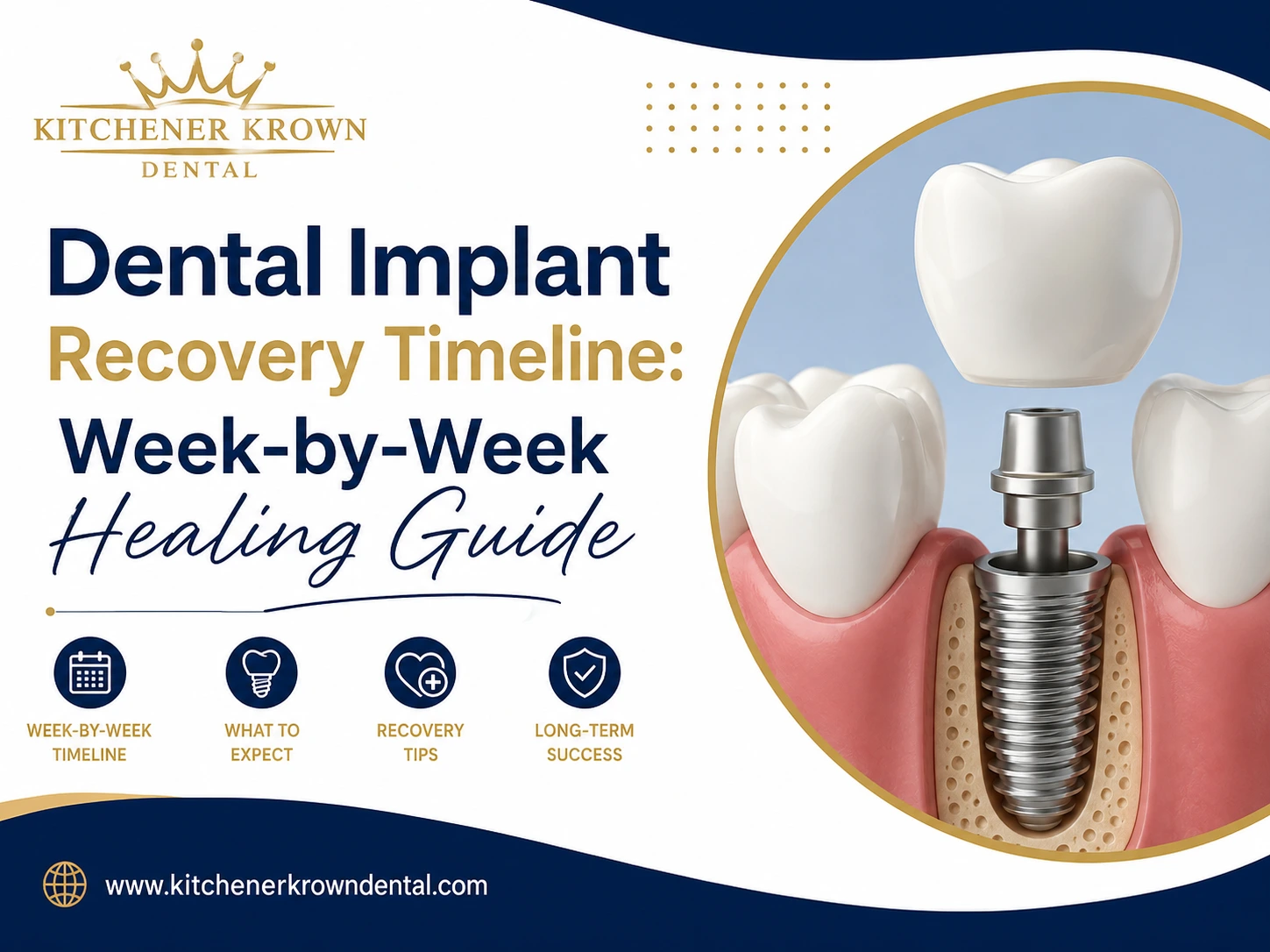
A dental implant is a small titanium post surgically placed into the jawbone to replace a missing tooth root. Over the next several months, the implant gradually fuses with the surrounding bone through a natural process called osseointegration.
Unlike dentures or dental bridges, dental implants become a permanent part of your jaw, providing exceptional stability and function.
Successful healing involves several stages:
-
- Initial soft tissue healing
-
- Bone regeneration around the implant
-
- Gum tissue maturation
-
- Osseointegration
-
- Placement of the permanent dental crown
Each phase is equally important for long-term success.
Immediately After Surgery (First 24 Hours)
The first day focuses on controlling bleeding and protecting the surgical site.
What You May Experience
-
- Mild bleeding or oozing
-
- Swelling around the gums and cheeks
-
- Tenderness
-
- Minor bruising
-
- Numbness from local anaesthesia
These symptoms are completely normal.
Recovery Tips
-
- Bite gently on gauze as instructed.
-
- Apply an ice pack for 15–20 minutes at a time.
-
- Rest with your head elevated.
-
- Avoid smoking or vaping.
-
- Do not drink through a straw.
-
- Eat soft, cool foods.
-
- Take prescribed medications exactly as directed.
Avoid disturbing the surgical site during the first day, as this allows the blood clot to stabilize.
Week 1: Early Healing Begins
During the first week, your body starts repairing the gum tissue surrounding the implant.
What Is Normal?
-
- Swelling peaks within 48–72 hours.
-
- Bruising may become more noticeable.
-
- Mild discomfort gradually decreases.
-
- Gum tissue starts closing around the implant.
Most patients return to work within one to three days, depending on the complexity of the procedure.
Best Foods During Week One
Choose foods that require minimal chewing:
-
- Yogurt
-
- Applesauce
-
- Scrambled eggs
-
- Smooth soups
-
- Oatmeal
-
- Cottage cheese
-
- Mashed potatoes
-
- Smoothies (without using a straw)
Staying hydrated also supports faster healing.
Week 2: Significant Improvement
By the second week, most visible healing has occurred.
Many patients notice:
-
- Less swelling
-
- Minimal discomfort
-
- Improved chewing comfort
-
- Healthier-looking gums
Any stitches that do not dissolve naturally may be removed during your follow-up appointment.
Your dentist will examine the implant site to confirm that healing is progressing as expected.
Weeks 3–4: Bone Healing Continues
Although the gums may appear fully healed, the jawbone is still undergoing important changes beneath the surface.
This stage is when osseointegration becomes more active.
The titanium implant gradually bonds with the surrounding bone, creating a stable foundation for your future restoration.
During This Stage
-
- Most daily activities can resume.
-
- Continue practising excellent oral hygiene.
-
- Avoid chewing hard foods directly on the implant area.
-
- Attend all scheduled follow-up visits.
Many patients mistakenly believe healing is complete because discomfort has disappeared. In reality, bone healing continues for several more months.
Months 2–3: Osseointegration Progresses
This is one of the most important stages of implant recovery.
Your jawbone continues forming around the implant, creating a strong biological connection.
You may feel completely normal, but the implant is still integrating with the bone.
At this stage, your dentist may:
-
- Take X-rays
-
- Evaluate implant stability
-
- Assess gum health
-
- Plan for the final restoration
Maintaining excellent oral hygiene is essential during this period.
Brush gently around the implant and floss daily to reduce plaque buildup.
Months 3–6: Final Healing
For many patients, complete osseointegration occurs within three to six months.
Once your dentist confirms that the implant is stable, the next steps include:
-
- Placing the abutment
-
- Taking digital impressions
-
- Fabricating your custom dental crown
-
- Attaching the permanent restoration
At this point, your dental implant begins functioning like a natural tooth. Many patients also explore our dental bridges and crowns options when planning their final restoration.
Factors That Affect Recovery Time
No two patients heal at exactly the same rate.
Several factors influence recovery, including:
Overall Health
Patients with well-managed medical conditions generally heal more predictably.
Conditions such as uncontrolled diabetes may slow healing.
Smoking
Smoking significantly increases the risk of implant failure because it reduces blood flow and delays tissue regeneration.
Stopping smoking before and after surgery greatly improves outcomes.
Bone Quality
Patients with strong jawbone density often experience smoother healing.
If bone grafting is required, the recovery timeline may be longer.
Oral Hygiene
Keeping the implant area clean helps prevent infection and supports healthy gums.
Following Post-Operative Instructions
Simple habits like eating soft foods, taking medications, and attending follow-up visits contribute to successful healing.
Foods to Eat During Recovery
Nutrition plays a major role in tissue repair.
Choose nutrient-rich soft foods such as:
-
- Greek yogurt
-
- Cottage cheese
-
- Protein shakes
-
- Scrambled eggs
-
- Avocado
-
- Salmon
-
- Bananas
-
- Sweet potatoes
-
- Cooked vegetables
-
- Oatmeal
-
- Smooth soups
Protein, vitamin C, vitamin D, calcium, and zinc all support healing.
Foods to Avoid
Avoid foods that may disturb the implant site:
-
- Popcorn
-
- Nuts
-
- Chips
-
- Hard candy
-
- Steak
-
- Sticky candy
-
- Chewy bread
-
- Extremely hot beverages
-
- Carbonated drinks during early recovery
Following these recommendations helps reduce irritation and promotes proper healing.
Oral Hygiene During Recovery
Good oral hygiene protects the implant from infection.
Recommended routine:
-
- Brush twice daily using a soft toothbrush.
-
- Rinse with any prescribed antimicrobial mouthwash.
-
- Floss carefully around neighbouring teeth.
-
- Avoid aggressive brushing directly over the surgical site until instructed.
Once healing progresses, continue regular dental cleanings to maintain implant health. Booking routine teeth cleaning visits helps keep the surrounding gum tissue healthy long after surgery.
Warning Signs You Shouldn’t Ignore
While complications are uncommon, contact your dental provider immediately if you experience:
-
- Severe or increasing pain
-
- Heavy bleeding after 24 hours
-
- Persistent swelling beyond one week
-
- Fever
-
- Pus around the implant
-
- Bad taste that doesn’t improve
-
- Implant mobility
-
- Difficulty swallowing
Prompt treatment can often prevent more serious complications. If any of these symptoms occur outside of regular hours, our emergency dentist services are available to help right away.
How to Speed Up Dental Implant Recovery
You cannot rush bone healing, but you can support it.
Helpful habits include:
-
- Follow every aftercare instruction.
-
- Eat a balanced diet.
-
- Stay hydrated.
-
- Avoid tobacco products.
-
- Limit alcohol.
-
- Get adequate sleep.
-
- Maintain excellent oral hygiene.
-
- Attend all follow-up appointments.
These steps improve the likelihood of long-term implant success.
Long-Term Care for Dental Implants
Once healing is complete, dental implants require maintenance similar to natural teeth.
To keep them healthy:
-
- Brush twice daily.
-
- Floss every day.
-
- Visit your dentist every six months.
-
- Wear a nightguard if you grind your teeth.
-
- Avoid chewing ice or hard objects.
-
- Maintain a healthy lifestyle.
With proper care, dental implants can last for decades. The American Dental Association (ADA) notes that consistent home care combined with regular professional checkups plays a key role in the long-term success of implant restorations.
Frequently Asked Questions About Dental Implant Recovery
1. How painful is dental implant recovery?
Most patients report mild to moderate discomfort for a few days. Pain is typically well managed with prescribed or over-the-counter medication.2. When can I return to work?
Many people return within one to three days after a straightforward implant procedure. More complex cases may require additional recovery time.3. How long does swelling last?
Swelling usually peaks within the first 72 hours and improves significantly after one week.4. When can I eat normally again?
Soft foods are recommended initially. Most patients gradually return to their normal diet over several weeks, depending on their dentist’s advice.5. How long does complete healing take?
While gum tissue heals within a few weeks, full osseointegration generally takes three to six months before the permanent restoration is placed.6. Can dental implants fail during healing?
Although uncommon, implant failure can occur due to infection, smoking, inadequate bone support, or poor oral hygiene. Following your dentist’s instructions greatly reduces this risk.Final Thoughts
Recovering from dental implant surgery is a gradual process, but understanding each stage can make the experience much less stressful. From the first 24 hours to complete osseointegration, every phase of healing plays an important role in the long-term success of your new smile.
By following your dentist’s aftercare instructions, maintaining excellent oral hygiene, eating a nutritious diet, and attending regular follow-up appointments, you can support a smooth recovery and enjoy the long-lasting benefits that dental implants provide. For additional patient guidance on post-surgical oral care, Health Canada and the Canadian Dental Association (CDA) both offer helpful resources on maintaining oral health during recovery.
If you’re considering dental implants or have questions about your recovery, the experienced team at Kitchener Krown Dental is here to help. We provide personalized treatment plans, advanced implant solutions, and ongoing support to ensure every patient enjoys a healthy, confident smile for years to come. Patients can also explore our family dentistry services for continued preventive care after treatment.