Kitchener Krown Dental

dental bridges in kitchener

overbite vs underbite
dental, Dental Tips & Care

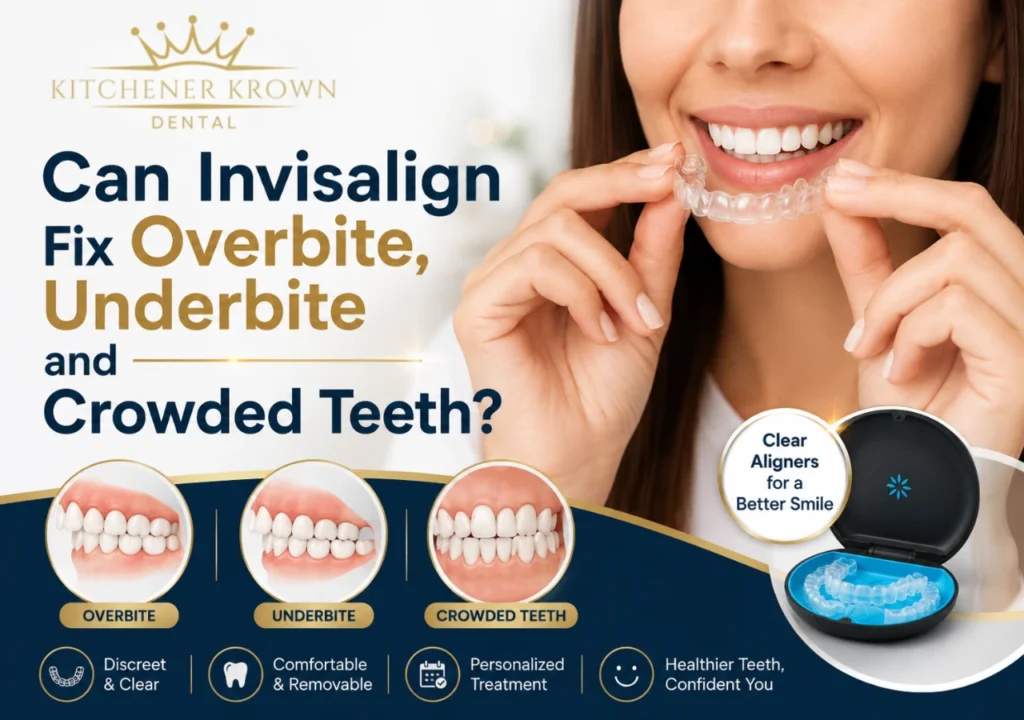
Can Invisalign Fix Overbite, Underbite and Crowded Teeth?

Overbite vs underbite is one of the first questions many patients ask before starting orthodontic treatment. Yes, Invisalign can correct many cases of overbite, underbite and crowded teeth when the required changes can be achieved through controlled tooth movement. However, clear aligners are not suitable for every bite problem. The severity, cause, tooth position, jaw relationship, gum health and treatment goals all influence which orthodontic approach is appropriate. If you are considering Invisalign in Kitchener, it is important to understand that orthodontic treatment involves more than making teeth look straighter. A patient may have crowded teeth but a relatively healthy bite. Another patient may have an overbite or underbite that affects how the upper and lower teeth meet. In some cases, the problem is primarily related to tooth position. In others, the relationship between the jaws plays a major role. That difference can determine whether Invisalign alone is appropriate. At Kitchener Krown Dental, Invisalign is offered as part of the clinic’s dental services for suitable patients. The practice provides dental care for children, adults and families in Kitchener, Ontario. What Is the Difference Between an Overbite and an Underbite? An overbite occurs when the upper front teeth overlap the lower teeth vertically, while an underbite occurs when the lower front teeth sit in front of the upper front teeth. Both are types of malocclusion, a term used to describe an abnormal relationship between teeth or jaws. When comparing overbite vs underbite, the direction of the misalignment is the main distinguishing factor. Understanding overbite vs underbite is useful because the two conditions can have different causes and treatment requirements. What is an overbite? A small amount of vertical overlap between the upper and lower front teeth is normal. An excessive overlap is generally described as an increased overbite or deep bite. Depending on its severity, an excessive overbite may be associated with: Not every overbite needs orthodontic correction. A dental professional evaluates the bite to determine whether it is affecting oral health, function, comfort or tooth stability. What is an underbite? An underbite occurs when the lower front teeth extend ahead of the upper front teeth when the mouth is closed. An underbite may be related to: This distinction is important because Invisalign primarily moves teeth. If the problem is mainly dental, controlled tooth movement may improve the bite. If there is a significant skeletal discrepancy involving the jaws, clear aligners alone may not provide complete correction. The American Association of Orthodontists identifies underbite as one condition that may be treated with clear aligners, while emphasizing that treatment depends on the individual case. Can Invisalign Correct an Overbite? Yes, Invisalign can correct many overbites by gradually repositioning teeth and improving the relationship between the upper and lower dental arches. The amount of correction possible depends on the severity and cause of the overbite. Regardless of which side of the overbite vs underbite comparison applies to you, the treatment approach starts with the same careful evaluation. Invisalign uses a series of custom-made clear aligners designed to apply controlled forces to specific teeth. Depending on the treatment plan, aligners may be used to address: However, correcting an overbite is not necessarily as simple as moving the upper front teeth backward. The entire bite needs to be considered. How do you fix an overbite? The appropriate treatment depends on what is causing the overbite and how severe it is. Possible treatment approaches include: The American Association of Orthodontists recognizes clear aligners as a treatment option for some orthodontic conditions while noting that they are not appropriate for every patient. When may Invisalign be appropriate for an overbite? Invisalign may be considered when: The important factor is clinical suitability, not simply the desire to use clear aligners. Can Invisalign Fix an Underbite? Invisalign can fix some underbites, particularly when the problem is primarily related to tooth position. More significant skeletal underbites may require braces, additional orthodontic treatment or specialist care. In the overbite vs underbite comparison, underbites are generally more likely to involve a skeletal component. This is why the answer to “Can Invisalign fix underbite?” is not the same for every patient. Consider two people with an underbite. One may have lower front teeth positioned slightly too far forward while the underlying jaw relationship is suitable for orthodontic tooth movement. Another person may have a significant difference in the position or development of the upper and lower jaws. Although both patients may appear to have an underbite, their treatment needs can be very different. How do you fix an underbite? Depending on the cause, treatment may involve: A dental assessment helps determine whether the underbite is primarily dental, skeletal or a combination of both. This distinction is especially important for adults because the position of the jaw itself cannot simply be changed by moving teeth with clear aligners. Can Invisalign Straighten Crowded Teeth? Yes, Invisalign can straighten many cases of crowded teeth by gradually moving teeth into better positions. The severity of crowding, available space, tooth position and overall bite determine whether clear aligners are appropriate. Crowding occurs when there is not enough space for teeth to align normally within the dental arch. Crowded teeth may: Crowding is one of the common orthodontic concerns that may be treated with clear aligners. Why do crowded teeth matter? Crowded teeth are not necessarily only a cosmetic concern. When teeth overlap, certain areas may be harder to reach with a toothbrush or floss. That can make plaque control more challenging. The American Dental Association notes that orthodontic treatment can address crowded or crooked teeth and abnormal bites, while the American Association of Orthodontists also recognizes oral-hygiene challenges associated with crooked or crowded teeth. Improving alignment may make some areas easier to clean, but orthodontic treatment does not replace daily brushing, flossing or routine dental care. Overbite vs Underbite: Which Is More Difficult to Correct? Neither an overbite nor an underbite is automatically more difficult to treat. The complexity depends on the cause, severity and amount of
emergency dental treatment
dental, Dental Tips & Care

Emergency Dental Treatment: 10 Early Signs You Need a Dentist Immediately

Emergency dental treatment is appropriate when pain, swelling, bleeding, infection, or tooth damage could worsen without prompt care. Severe toothache, facial swelling, a knocked-out permanent tooth, significant cracks or breaks, and uncontrolled bleeding deserve urgent assessment. Knowing the warning signs helps you act quickly, protect your natural teeth, and avoid preventable complications. What Is Emergency Dental Treatment? Emergency dental treatment is care for a dental problem that requires prompt assessment because delaying it could increase pain, infection, tissue damage, or the risk of losing a tooth. Common examples include severe toothache, dental abscesses, significant tooth fractures, dental trauma, uncontrolled oral bleeding, and knocked-out permanent teeth. The important distinction is that not every uncomfortable dental problem is an emergency. A small cosmetic chip without pain may be suitable for a regular appointment, while a knocked-out adult tooth needs immediate attention. At Kitchener Krown Dental, the dental team provides family and restorative care alongside emergency appointments. The safest approach is to judge a dental problem by its symptoms, severity, speed of progression, and potential to damage the tooth or surrounding tissues. 1. Severe Toothache: A Common Dental Emergency Sign A severe toothache is one of the most common reasons people seek emergency dental treatment. Pain may come from advanced tooth decay, inflammation of the dental pulp, infection, trauma, a cracked tooth, or a problem beneath an existing filling or crown. Pay particular attention when tooth pain: The Canadian Dental Association recommends contacting your dentist for toothache and specifically advises against placing pain medication directly on the sore tooth. A Useful Rule Pain that repeatedly returns is information. Pain that is becoming stronger is a reason to act. Do not assume that pain disappearing means the tooth has healed. In some situations, a change in pain can occur as the tissue inside a severely damaged tooth deteriorates. 2. Facial, Jaw, or Gum Swelling: When You Need Emergency Dental Care Swelling around a tooth, gum, cheek, or jaw can be a sign of infection. A dental infection may develop when bacteria enter the pulp of a tooth or the surrounding tissues. Signs can include: Kitchener Krown Dental identifies swelling and persistent tooth symptoms among reasons patients should seek dental assessment. Its root canal service also lists swelling, abscesses, severe pain, and lingering sensitivity as symptoms that may require treatment. If swelling is rapidly increasing or you have difficulty breathing or swallowing, seek emergency medical care rather than waiting for a routine dental appointment. Those symptoms can indicate that an infection is extending beyond the immediate tooth area. 3. A Cracked Tooth Causes Sharp Pain When You Bite A cracked tooth can be surprisingly difficult to diagnose at home. You may experience a sharp sensation when biting down, pain when releasing your bite, sensitivity to temperature, or intermittent discomfort that seems to disappear between episodes. The problem is that chewing places repeated forces on the tooth. A crack that begins relatively small can progress and involve deeper tooth structures. Treatment depends on factors such as: Potential treatment can include bonding or another restoration, a crown, emergency root canal treatment when the pulp is affected, or extraction when the tooth cannot be saved. Until you are assessed, avoid chewing hard foods on the affected side. 4. A Broken or Chipped Tooth: A Dental Emergency, Not Just a Cosmetic Problem A small chip without pain may not require emergency care. A significant broken tooth, however, deserves prompt assessment—particularly when there is bleeding, severe sensitivity, or pain. A fracture can expose the inner portion of the tooth and make it more vulnerable to bacterial contamination and further structural damage. The Ontario Dental Association recommends contacting a dentist promptly after a significant broken or chipped tooth and advises patients to bring any recovered tooth fragment to the appointment. Depending on the injury, a dentist may recommend: Kitchener Krown Dental provides restorative services including fillings, crowns, bridges, and other treatments for damaged teeth. 5. A Knocked-Out Permanent Tooth: A Time-Sensitive Dental Emergency A knocked-out permanent tooth is one of the clearest dental emergencies. The goal is to get professional care as quickly as possible because the time outside the mouth can affect the possibility of successfully repositioning the tooth. If an adult tooth is knocked out: The Ontario Dental Association notes that a permanent tooth may be replanted and that acting quickly is important. It also advises never attempting to reinsert a knocked-out baby tooth, because doing so can damage the developing permanent tooth. Adult Tooth vs. Baby Tooth This is an important distinction for parents. 6. Uncontrolled Oral Bleeding: A Dental Emergency That Needs Urgent Care Bleeding can occur after an injury, tooth extraction, or other dental problem. A small amount of bleeding may be expected in some circumstances. Persistent or heavy bleeding is different. Until you receive professional advice, apply firm, gentle pressure with clean gauze or cloth. Avoid repeatedly removing the material to check whether the bleeding has stopped. Seek urgent professional assistance if bleeding remains uncontrolled. If the bleeding follows major facial trauma, a significant head injury, fainting, or another serious injury, medical emergency care may be more appropriate. 7. A Dental Abscess: A Serious Dental Emergency With Pus or a Bad Taste A dental abscess is a localized collection of infection associated with a tooth or surrounding tissues. Possible warning signs include: One of the most important misconceptions about an abscess is that less pain does not necessarily mean the infection is gone. If pressure is released and drainage occurs, pain may temporarily decrease while the underlying source remains. Treatment depends on the diagnosis. Depending on the tooth and extent of infection, a dentist may recommend drainage, root canal treatment, restoration, or extraction. Antibiotics may be appropriate in certain situations, but they do not automatically eliminate the dental source of an infection. The underlying tooth or tissue still needs appropriate dental assessment. 8. Severe Sensitivity to Hot or Cold Lingers Not all sensitivity means you need emergency dental treatment. Brief sensitivity that disappears immediately

dental implants vs dental bridges
dental, Dental Tips & Care

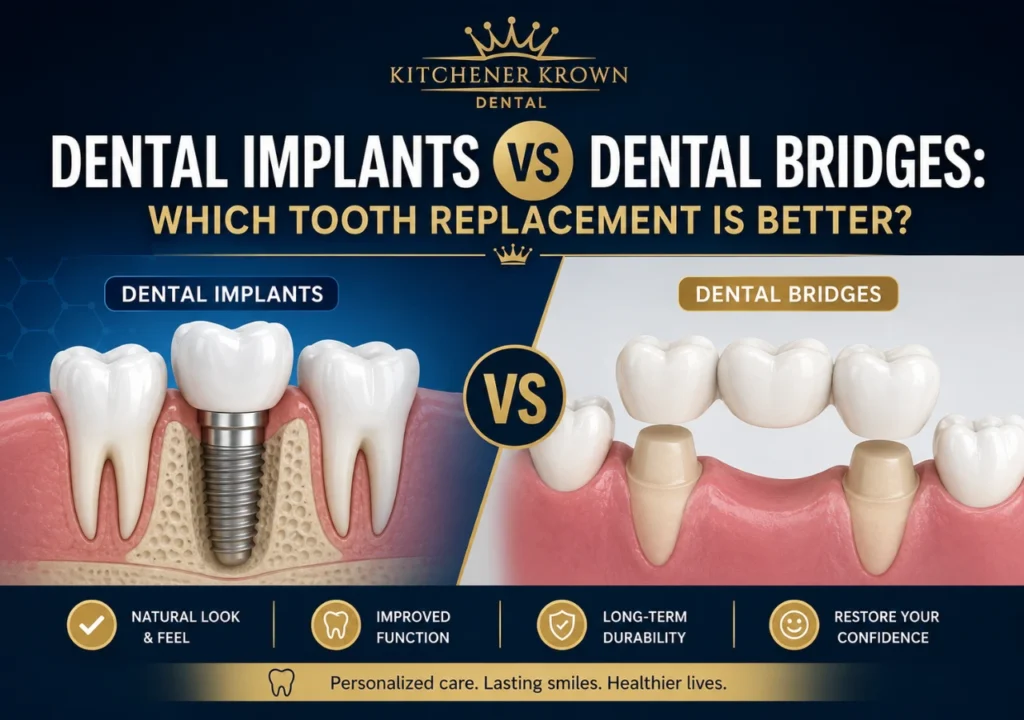
Dental Implants vs Dental Bridges: Which Tooth Replacement Is Better?

Choosing between dental implants vs dental bridges depends on your oral health, bone density, budget, and long-term goals. Dental implants generally last longer and preserve jawbone, while dental bridges provide a quicker, more affordable solution for many patients. A personalized dental assessment ensures the most suitable treatment. Missing a tooth affects far more than your smile. It changes how you chew, speak, and even how your jawbone supports your facial structure over time. As a dentist who has treated patients with missing teeth for many years, I’ve seen firsthand that there isn’t one universal solution. Two patients with nearly identical dental problems often require completely different treatment plans because their lifestyles, oral health, and long-term expectations differ. One patient may prioritize longevity and bone preservation. Another may simply want a fast, affordable restoration before an important family event. The goal isn’t just replacing a missing tooth—it’s restoring confidence, function, and lifelong oral health. In this guide, we’ll compare dental implants vs dental bridges, explain when each option works best, and help you make an informed decision with confidence. Understanding Tooth Replacement Options A missing tooth is more than a cosmetic concern. Without replacement, neighboring teeth gradually drift into the empty space. This can change your bite, increase wear on surrounding teeth, and make cleaning more difficult. Even more importantly, the jawbone underneath the missing tooth begins shrinking because it no longer receives stimulation from a natural tooth root. According to the Canadian Dental Association, replacing missing teeth helps maintain oral function, chewing efficiency, and overall dental health. Today, the two most common fixed tooth replacement options are: Both restore appearance and chewing ability, but they work very differently. What Is a Dental Bridge? A dental bridge is a fixed dental restoration that literally “bridges” the gap left by one or more missing teeth. Instead of replacing the tooth root, the bridge is supported by neighboring natural teeth or, in some cases, dental implants. Most traditional bridges include: Types of Dental Bridges There are several types of bridges, each designed for different situations. Traditional Bridge The most common option. Healthy teeth on each side of the gap are prepared to support crowns. Best for: Cantilever Bridge Used when only one neighboring tooth is available. Because chewing forces are uneven, this design is less common today. Maryland Bridge Rather than crowns, this bridge uses metal or porcelain “wings” bonded behind neighboring teeth. Advantages include: Implant-Supported Bridge Instead of relying on natural teeth, implants anchor the bridge. This option is frequently recommended when replacing multiple adjacent missing teeth because it protects remaining healthy teeth. Benefits of Dental Bridges Many patients choose bridges because they offer: Treatment usually requires only two to three appointments. Potential Limitations Although bridges are an excellent solution for many patients, they have some disadvantages. Traditional bridges require reshaping healthy neighboring teeth. Additionally, because no artificial root replaces the missing tooth, jawbone loss continues beneath the bridge over time. Plaque accumulation beneath the pontic also requires careful daily cleaning using floss threaders or specialized brushes. What Is a Dental Implant? A dental implant replaces the entire missing tooth—including its root. Instead of resting on neighboring teeth, a titanium implant is surgically placed into the jawbone, where it integrates naturally through a process called osseointegration. Once healing is complete, an abutment and custom porcelain crown are attached. The result closely resembles a natural tooth in appearance, strength, and function. Benefits of Dental Implants Dental implants provide several advantages beyond simply replacing a missing tooth. Preserve Jawbone Unlike bridges, implants stimulate the jawbone during chewing, helping prevent bone deterioration. This preservation supports facial structure and reduces the sunken appearance often associated with long-term tooth loss. Protect Healthy Teeth Because implants are self-supporting, neighboring teeth remain untouched. No grinding or crowning of healthy teeth is required. Natural Appearance Well-designed implant crowns closely match surrounding teeth in: Most people cannot distinguish an implant from a natural tooth. Long-Term Durability One of the biggest reasons patients choose implants is longevity. Clinical studies consistently report survival rates exceeding 95% after ten years when properly maintained, based on research from the International Team for Implantology (ITI Consensus Reports). Dental Bridge vs Implant: The Biggest Differences While both treatments restore missing teeth, their approach is fundamentally different. Feature Dental Bridge Dental Implant Replaces tooth root No Yes Requires surgery No Yes Preserves jawbone Limited Yes Treatment time Shorter Longer Alters neighboring teeth Usually No Long-term durability Good Excellent Cleaning Special floss required Similar to natural tooth Is a Dental Implant Better Than a Bridge? The answer depends on your oral health, lifestyle, and treatment goals—not simply which option is newer or more expensive. In general, dental implants are considered the gold standard for replacing a single missing tooth because they restore both the crown and root, helping preserve jawbone and avoiding changes to adjacent teeth. However, dental bridges remain an excellent solution for many patients, especially when treatment time, budget, or medical factors make implants less suitable. A Dental Implant May Be Better If You: A Dental Bridge May Be Better If You: How Long Does a Dental Bridge Last? A common question patients ask is, “How long does a dental bridge last?” With proper care, most dental bridges last 10–15 years, although many remain functional for longer. The lifespan depends on several factors: Poor oral hygiene can lead to decay or gum disease around the supporting teeth, which is one of the most common reasons bridges require replacement. Tips to Extend the Life of a Dental Bridge How Long Do Dental Implants Last? Another frequently asked question is, “How long do dental implants last?” Dental implants are designed to be a long-term solution. The implant post itself can often last 25 years or longer, and in many cases, for life with proper care. The implant crown may eventually require replacement due to normal wear, but the titanium implant typically remains stable if healthy bone and gum tissue are maintained. Research published by the International Team for

Emergency
dental, Dental Tips & Care

Why Ignoring Tooth Pain Can Cost You a Tooth

Most people have experienced a toothache at some point. Sometimes the pain disappears after a few hours, making it tempting to assume the problem has resolved itself. Unfortunately, tooth pain rarely goes away without a reason. In many cases, the pain fades because the nerve inside the tooth has become severely damaged—not because the tooth has healed. Ignoring dental pain can turn a simple cavity into a serious infection, increase treatment costs, and even lead to permanent tooth loss. What begins as mild discomfort may quickly become a dental emergency requiring immediate care. Understanding what tooth pain means, recognizing the warning signs, and knowing when to visit an emergency dentist can help you protect your oral health and avoid more invasive procedures. Quick Answers About Tooth Pain Question Short Answer Why does tooth pain sometimes stop on its own? The nerve inside the tooth may have died from infection, not because the tooth has healed. Can an infected tooth heal without treatment? No. Once bacteria reach the inside of the tooth, professional treatment is necessary. Is every toothache a dental emergency? No, but severe pain, swelling, trauma, or infection should be evaluated as soon as possible. What happens if I delay treatment? Small cavities can progress to infection, bone loss, and higher treatment costs. Can a tooth infection spread? Yes, in rare but serious cases it can spread to surrounding tissue and the bloodstream. Tooth Pain Is Your Body’s Warning System Pain is one of the body’s natural defense mechanisms. It signals that something isn’t right. When a tooth hurts, it often indicates that bacteria, inflammation, trauma, or infection is affecting the tooth, surrounding gums, or supporting bone. Many people try to manage symptoms with: While these methods may temporarily reduce discomfort, they do not eliminate the underlying cause. The sooner a dentist identifies the problem, the better the chances of saving the tooth. Common Causes of Tooth Pain Tooth pain can have many causes, ranging from minor sensitivity to severe infection. Tooth Decay Cavities develop when bacteria break down tooth enamel. Without treatment, decay progresses deeper into the tooth, eventually reaching the pulp where nerves and blood vessels are located. Common symptoms include: Dental Infection (Abscess) An untreated cavity can develop into an abscess. An abscess is a pocket of infection filled with bacteria and pus. This condition requires immediate treatment because it can spread beyond the tooth. Symptoms include: An abscess should never be ignored. Cracked or Broken Teeth Small cracks may not always be visible. They often occur after: Pain usually appears while chewing or when exposed to hot and cold temperatures. Without treatment, bacteria can enter the crack and infect the tooth. Gum Disease Inflamed gums can also cause discomfort. As gum disease progresses, it damages the tissues and bone supporting your teeth. Symptoms include: Worn Dental Fillings or Crowns Old restorations eventually wear out. Once they become loose or damaged, bacteria can enter beneath them and create new decay. Why Tooth Pain Sometimes Suddenly Stops Many patients believe they are healing when their tooth stops hurting. Unfortunately, the opposite may be true. As infection reaches the tooth’s nerve, the nerve may eventually die. Since the nerve no longer functions, pain disappears temporarily. Meanwhile, the infection continues spreading inside the tooth and into the surrounding bone. Eventually, patients often experience: At this stage, treatment becomes more complex. What Happens When You Delay Treatment? Ignoring tooth pain often allows a manageable problem to become much more serious. Small Cavities Become Large Cavities Early decay may only require a simple filling. After several months, the same tooth might require: Infection Reaches the Tooth Root Once bacteria enter the pulp chamber, they travel through the root canals into the surrounding bone. This infection destroys healthy tissues and weakens the tooth’s support. Bone Loss Begins Untreated infections can gradually destroy the jawbone around the affected tooth. Bone loss makes future treatments like dental implants more complicated. Increased Treatment Costs Early dental care is almost always more affordable. For example: Early cavity: Advanced infection: Waiting often increases both treatment time and expenses. When Tooth Pain Becomes a Dental Emergency Not every toothache requires same-day treatment, but certain symptoms should never be ignored. Seek immediate care if you experience: These symptoms may indicate a serious infection requiring urgent attention from an emergency dentist. Can an Infected Tooth Heal on Its Own? No. Once bacteria reach the inside of the tooth, professional treatment becomes necessary. Possible treatments include: Dental Filling Used when decay is still limited to the outer layers. Root Canal Therapy If the pulp becomes infected, the dentist removes the infected tissue, disinfects the canals, and seals the tooth. This treatment often saves the natural tooth. Dental Crown After extensive damage or root canal therapy, a crown restores strength and function. Tooth Extraction When the tooth cannot be saved, extraction prevents infection from spreading. Replacement options may include: Saving the natural tooth is usually the preferred option whenever possible. Signs You Should Never Ignore Certain symptoms suggest immediate evaluation is necessary. Watch for: Sharp Pain When Biting Often indicates: Lingering Sensitivity Pain lasting longer than 30 seconds after drinking something hot or cold may indicate nerve damage. Swollen Face Facial swelling often signals infection spreading beyond the tooth. Gum Pimple A small bump on the gum may actually be draining an abscess. Even if it isn’t painful, treatment is still required. Persistent Bad Breath Chronic bad breath may result from bacterial infection beneath the gums or inside a damaged tooth. How Dentists Diagnose Tooth Pain Finding the source of pain isn’t always straightforward. Dentists use several methods, including: These evaluations, consistent with guidance from the Canadian Dental Association (CDA), help determine the exact cause and recommend the most effective treatment. Preventing Tooth Pain Before It Starts Many dental emergencies are preventable. Healthy habits include: Brush Twice Daily Use fluoride toothpaste and brush for two minutes, a routine recommended by the American Dental Association (ADA). Floss Every Day Floss removes plaque

Invisalign
dental

How Long Does Invisalign Take? Real Treatment Timelines, Explained

Most Invisalign treatments take between 12 and 18 months, although treatment times vary depending on the complexity of the case. Minor spacing issues may be corrected within 6 to 8 months, while moderate to complex orthodontic concerns can require 18 to 30 months. Consistently wearing aligners for 20 to 22 hours per day is one of the most important factors affecting treatment success and overall treatment duration. If you’re considering Invisalign, chances are you’re asking one important question before committing to treatment: how long does Invisalign take to straighten teeth? The answer depends on several factors, including the severity of your alignment issues, your bite condition, oral health, and how consistently you wear your aligners. Modern Invisalign treatment has transformed orthodontic care by offering a discreet, comfortable, and highly predictable alternative to traditional braces. Using advanced digital treatment planning and custom-made clear aligners, patients can often see a simulation of their future smile before treatment even begins. Learn more about our Invisalign treatment in Kitchener to see how this approach can work for you. Whether you’re dealing with mild crowding, spacing concerns, or bite correction issues, understanding realistic Invisalign timelines can help you make informed decisions about your oral health and smile goals. This comprehensive guide explains how Invisalign works, average treatment timelines, monthly progress expectations, factors that influence treatment duration, and expert insights to help you maximize your results. What Is Invisalign? Invisalign is a clear aligner system that gradually moves teeth into their ideal positions using a series of custom-designed aligners. Unlike traditional braces that rely on metal brackets and wires, Invisalign aligners are: Each aligner applies controlled pressure to specific teeth, creating small movements over time that lead to significant improvements in alignment, bite function, and smile aesthetics. Because every smile is unique, Invisalign treatment plans are fully customized to meet individual needs. Invisalign by the Numbers The popularity of Invisalign continues to grow worldwide. Key Invisalign Facts These numbers highlight why Invisalign remains a trusted option for patients seeking effective orthodontic treatment. How Long Does Invisalign Take? For most patients, Invisalign treatment takes approximately 12 to 18 months. However, treatment duration varies depending on the type and complexity of the orthodontic issue being corrected. Orthodontic Concern Average Treatment Time Minor spacing 6–8 months Mild crowding 6–12 months Moderate crowding 12–18 months Overbite correction 12–24 months Underbite correction 18–24 months Crossbite treatment 12–24 months Complex orthodontic cases 18–30 months While these timelines provide general expectations, a personalized consultation offers the most accurate estimate. Why Invisalign Treatment Time Varies No two smiles respond exactly the same way to treatment. Several factors influence how quickly teeth move and how long treatment will take. Severity of Misalignment The amount of tooth movement required plays a major role in determining treatment duration. Mild Cases Examples include: Average timeline: 6–8 months Moderate Cases Examples include: Average timeline: 12–18 months Complex Cases Examples include: Average timeline: 18–30 months Aligner Wear Time One of the most significant factors affecting Invisalign treatment speed is patient compliance. For optimal results, aligners should be worn: Removing aligners too often can delay progress and extend treatment time. Oral Health Healthy gums and supporting bone structures allow teeth to move more predictably. Conditions that may impact treatment include: Maintaining excellent oral health supports efficient tooth movement. Regular teeth cleaning visits can help keep your gums and teeth in optimal condition throughout treatment. Biological Response Each person’s body responds differently to orthodontic treatment. Factors such as age, bone density, and individual healing responses can influence treatment timelines. Invisalign Timeline: Month-by-Month Progress Understanding what happens during treatment helps patients set realistic expectations. Month 1: Getting Started Your first aligners begin moving targeted teeth. Common experiences include: Most patients adjust within a few days. Months 2–3: Early Visible Changes Many patients begin noticing: This phase often boosts confidence because results become increasingly noticeable. Months 4–6: Significant Progress During this stage: For many patients, this is when the smile transformation becomes clearly visible. Months 7–12: Refinement and Alignment Moderate cases often finish during this phase. Patients may notice: Regular monitoring ensures treatment remains on track. Months 12–24+: Advanced Corrections Complex orthodontic cases continue through this stage. The focus shifts toward: Additional aligners may be recommended to perfect final results. What Dentists Want Patients to Know About Invisalign Timelines Many patients focus exclusively on how quickly treatment can be completed. However, experienced dental professionals understand that achieving long-term stability is more important than speed alone. Consistency Matters More Than Complexity A patient with moderate crowding who wears aligners correctly may complete treatment sooner than someone with a mild case who frequently removes them. Every Smile Responds Differently Teeth move through living bone and tissue, which means treatment timelines naturally vary between individuals. Refinements Are Common Additional aligners are often used to perfect final tooth positions and bite relationships. Refinements are a normal part of achieving optimal results. Retainers Protect Results After treatment, retainers help prevent teeth from shifting back into their previous positions. Long-term retention is essential for maintaining your new smile. What Can Speed Up Invisalign Treatment? While biology cannot be rushed, certain habits help maintain efficient progress. Wear Aligners Consistently Following the recommended wear schedule remains the most important factor. Change Aligners on Schedule Switching trays according to your treatment plan keeps tooth movement progressing efficiently. Attend Regular Checkups Routine evaluations allow dental professionals to monitor progress and make necessary adjustments. Maintain Excellent Oral Hygiene Healthy gums and teeth support predictable tooth movement throughout treatment. The American Dental Association (ADA) recommends consistent brushing and flossing as a foundation for any orthodontic treatment, including clear aligners. Common Reasons Invisalign Treatment Gets Delayed Understanding potential setbacks can help patients avoid unnecessary extensions. Common causes include: Following professional recommendations helps keep treatment on schedule. If a dental emergency arises during treatment, our emergency dentist services can help address the issue quickly so your Invisalign plan stays on track. Invisalign vs Traditional Braces Feature Invisalign Traditional Braces Appearance Nearly invisible Visible Removable Yes No Oral

dental

How Long Do Dental Crowns Last? Tips to Make Them Last 15+ Years

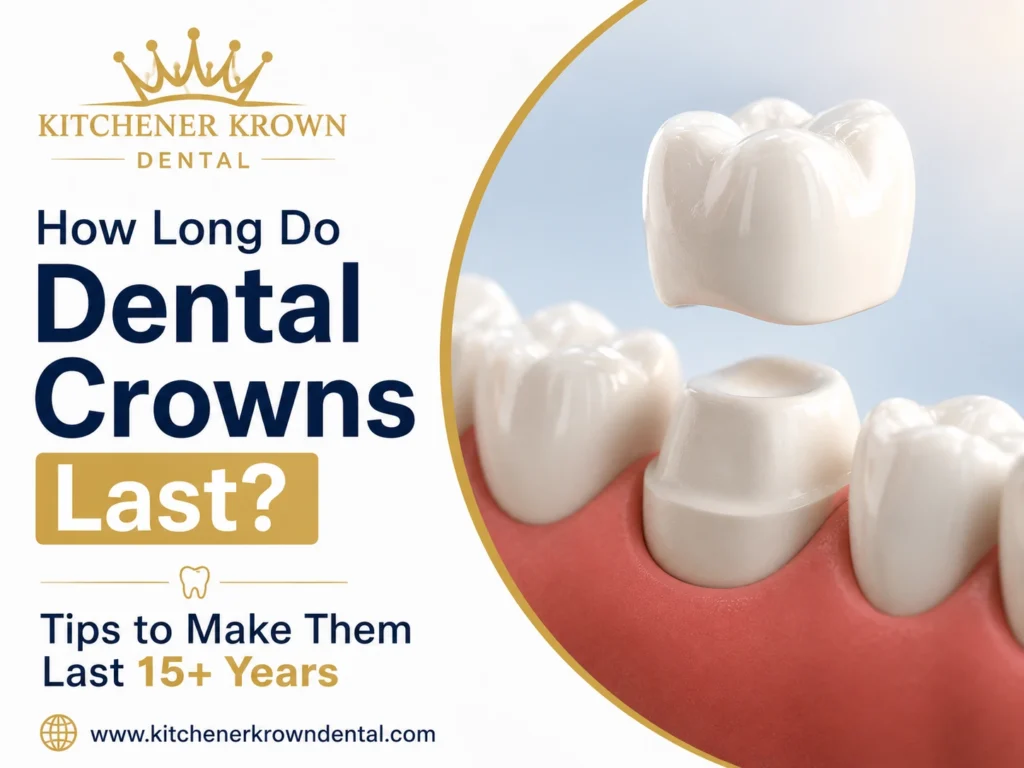
Most dental crowns last between 10 and 15 years, but many can remain strong and functional for 20 years or longer with proper care. Factors such as crown material, oral hygiene, teeth grinding, diet, and regular dental visits all play a role in determining how long a crown will last. For patients in Kitchener, Waterloo, Cambridge, and across Ontario, one of the most common questions after treatment is: “How long will my dental crown last before I need a replacement?” The good news is that modern dental crowns are designed to be durable and long-lasting. With healthy habits and preventive care, many patients enjoy decades of protection from a single crown. What Is a Dental Crown? A dental crown is a custom-made cap placed over a damaged, weakened, cracked, or heavily restored tooth. It restores strength, function, and appearance while protecting the remaining natural tooth from further damage. Dentists commonly recommend dental crowns for: Cracked teeth Large cavities Broken teeth Root canal-treated teeth Severely worn teeth Cosmetic improvements Teeth with large fillings By covering the entire visible portion of the tooth, a crown helps preserve natural tooth structure and restore normal chewing function. Learn more about our dental crown and bridge treatments at Kitchener Krown Dental. How Long Do Dental Crowns Last? Most dental crowns last between 10 and 15 years, although many patients keep their crowns for 20 years or longer. Research in restorative dentistry has shown that crown survival rates remain high after 10 years when patients maintain good oral hygiene and attend regular dental visits. At Kitchener Krown Dental, we often see crowns lasting well beyond their expected lifespan when patients follow preventive care recommendations and address dental concerns early. The longevity of a crown depends on: Crown material Oral hygiene habits Gum health Bite alignment Teeth grinding Dietary habits Quality of placement Dental Crown Lifespan by Material Not all crown materials offer the same level of durability. Crown Material Average Lifespan Durability Appearance Zirconia Crown 15–20+ Years Excellent Excellent Gold Crown 20+ Years Outstanding Moderate Porcelain Crown 10–15 Years Good Excellent Ceramic Crown 10–15 Years Good Excellent Porcelain-Fused-to-Metal 10–15 Years Good Good Zirconia Crowns Zirconia crowns are known for their strength and resistance to fractures. They are often recommended for molars because they can withstand strong chewing forces. Porcelain Crowns Porcelain crowns provide excellent aesthetics and closely resemble natural tooth enamel, making them a popular choice for front teeth. Gold Crowns Although less common today, gold crowns remain one of the longest-lasting restorative options available. Dental Crowns vs Other Restorative Treatments Many patients compare crowns with other dental treatments before making a decision. Treatment Average Lifespan Dental Filling 5–10 Years Dental Crown 10–20+ Years Veneer 10–15 Years Implant Crown 15–25+ Years Crowns offer greater protection than fillings when a tooth has experienced significant damage or weakening. If you would like to compare these options in more detail, our dental implant services in Kitchener page explains how implant crowns differ from traditional crowns placed on natural teeth. What Causes Dental Crowns to Fail? Even high-quality crowns can eventually require replacement. The most common reasons include: Tooth Decay Beneath the Crown While a crown itself cannot get a cavity, the natural tooth underneath can. Poor oral hygiene may allow bacteria to enter around the crown margins and cause decay. Teeth Grinding (Bruxism) Grinding places excessive pressure on dental restorations and may cause: Cracks Chips Loosening Premature wear Gum Disease Healthy gums help support crowned teeth. Gum disease can lead to gum recession, bone loss, and crown instability. Trauma or Injury Sports injuries and accidents can damage crowns and natural teeth alike. If this happens to you, our emergency dentist services are available to address sudden crown damage quickly. Poor Oral Hygiene Inadequate brushing and flossing increase the risk of decay and gum disease around crowned teeth. Expert Insight From Our Kitchener Dental Team One of the biggest misconceptions patients have is that the crown itself determines how long treatment lasts. In reality, the health of the tooth underneath and the surrounding gums often has the greatest impact on crown longevity. In our experience, patients who maintain excellent oral hygiene, wear a nightguard when necessary, and attend routine checkups are far more likely to keep their crowns for 15 years or longer. 5 Mistakes That Shorten the Life of Your Crown 1. Skipping Flossing Plaque buildup around crown margins increases the risk of decay. 2. Ignoring Sensitivity Persistent sensitivity may indicate a developing issue beneath the crown. 3. Chewing Ice Ice can chip or fracture dental restorations. 4. Missing Dental Appointments Routine exams help identify small problems before they become larger concerns. Regular teeth cleaning visits also help protect the gum tissue surrounding your crowns. 5. Not Wearing a Nightguard Patients who grind their teeth can significantly extend crown lifespan by protecting their restorations while sleeping. How to Make Dental Crowns Last 15+ Years Following a few simple habits can dramatically improve crown longevity. Brush Twice Daily Use fluoride toothpaste and a soft-bristled toothbrush. Floss Every Day Flossing helps remove bacteria from areas your toothbrush cannot reach. Schedule Regular Dental Visits Professional cleanings and exams help detect problems early. Wear a Nightguard if Recommended A custom nightguard can protect crowns from grinding damage. Avoid Hard Foods Chewing ice, hard candy, and popcorn kernels may damage crowns. Maintain Healthy Gums Healthy gums provide support for crowned teeth and help prevent complications. Address Dental Problems Early Ignoring minor symptoms can lead to more extensive treatment later. The American Dental Association (ADA) recommends addressing any new sensitivity or discomfort around a crown as soon as it appears, rather than waiting for symptoms to worsen. How Much Does a Dental Crown Cost? The cost of a dental crown varies depending on several factors, including: Crown material Tooth location Complexity of treatment Need for root canal therapy Insurance coverage Although crowns require an upfront investment, they can help preserve natural teeth and reduce the likelihood of more expensive procedures in the future. Related

Dental Crowns
dental

7 Signs You May Need a Dental Crown Before Your Tooth Breaks

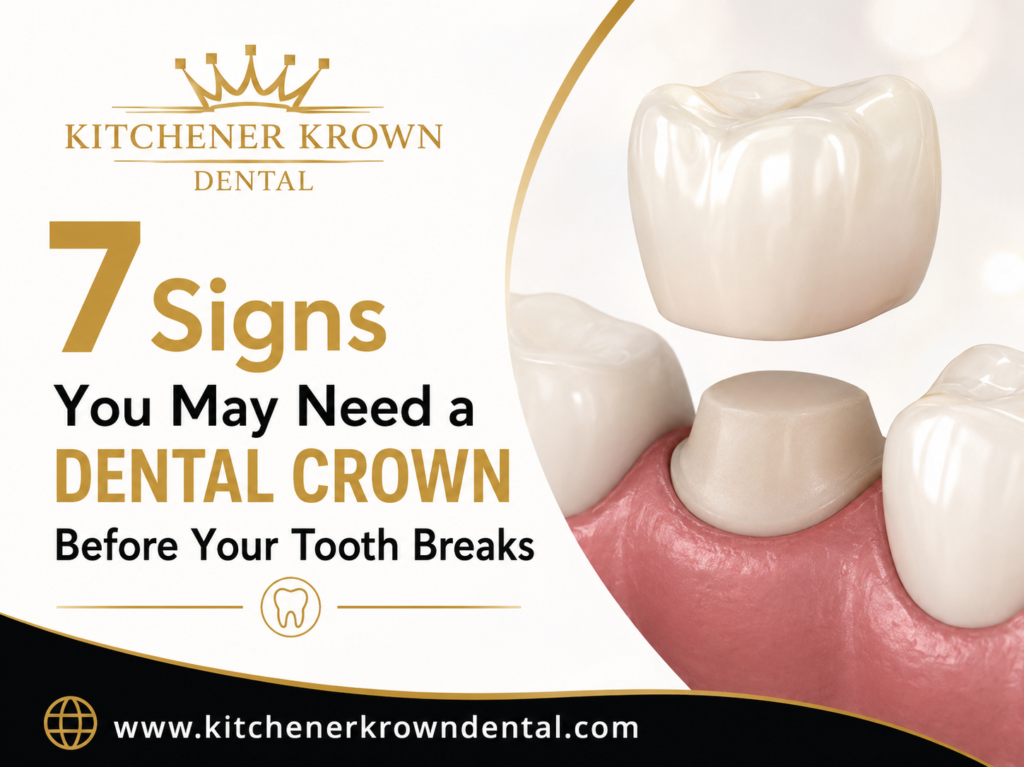
A damaged tooth rarely breaks without warning. In most cases, your teeth provide subtle signs that something is wrong long before a serious fracture occurs. Recognising these symptoms early can help you avoid pain, complex treatments, and unexpected dental expenses. Dental crowns are one of the most effective restorative dentistry solutions available today. They strengthen weakened teeth, restore function, improve appearance, and help prevent further damage. Yet many people wait until a tooth cracks or breaks before seeking treatment. If you’ve been wondering whether a damaged tooth needs attention, this guide explains the seven most common signs that may indicate you need a dental crown before your tooth breaks. What Are Dental Crowns? A dental crown is a custom-made cap placed over a damaged, weakened, or heavily restored tooth. It covers the visible portion of the tooth above the gum line, restoring its shape, size, strength, and appearance. Modern dental crowns can be made from porcelain, ceramic, zirconia, metal alloys, or a combination of materials. They are designed to blend naturally with your smile while providing long-term protection. Learn more about our dental crown and bridge treatments in Kitchener. Common Reasons Dentists Recommend Dental Crowns Protecting cracked teeth Restoring severely worn teeth Covering large fillings Strengthening root canal-treated teeth Repairing broken teeth Improving cosmetic appearance through cosmetic dentistry Supporting dental bridges Covering dental implants 1. You Feel Pain When Biting or Chewing One of the earliest signs of a weakened tooth is discomfort when chewing. If you experience pain when biting down on food or releasing pressure after chewing, it may indicate: A cracked tooth Structural damage Deep decay A weakened tooth cusp The problem may seem minor at first, but repeated chewing forces can worsen the damage over time. If pain persists, our emergency dentist in Kitchener can evaluate the tooth promptly. Why a Crown May Help A dental crown distributes biting forces evenly across the tooth. This reinforcement reduces stress on weakened areas and helps prevent further cracking. Questions People Often Ask Why does my tooth hurt when I chew? Can a cracked tooth heal on its own? Do I need a crown if my tooth only hurts occasionally? What happens if I ignore tooth pain while eating? 2. Your Tooth Has a Large Filling Large fillings are often effective for treating cavities, but they can weaken the remaining natural tooth structure. When more than half of a tooth has been restored with a filling, the tooth may become vulnerable to: Cracks Fractures Wear Structural failure Over time, repeated pressure from chewing can cause the tooth walls around the filling to break. Why Dentists Recommend Crowns for Large Fillings A crown surrounds and protects the remaining tooth structure. Instead of relying solely on the filling, the entire tooth receives support. Our restorative dental care team in Kitchener assesses each case individually to determine when a crown becomes necessary. Signs Your Large Filling May Need Additional Protection Sensitivity around the filling Visible cracks Food getting trapped Darkening around restoration edges Chipped tooth structure 3. You Notice Visible Cracks in Your Tooth A crack may appear harmless, but it often indicates that the tooth is under stress. Cracks can develop from: Teeth grinding Trauma Chewing hard foods Age-related wear Previous dental work Some cracks remain superficial, while others extend deeper into the tooth. Warning Signs of a Cracked Tooth Sharp pain while chewing Sensitivity to temperature Intermittent discomfort Visible lines on the tooth surface Pain when releasing bite pressure Why Early Treatment Matters Small cracks can grow larger over time. Once a crack extends below the gum line, saving the tooth becomes much more difficult. A dental crown can stabilise the tooth and reduce the risk of complete fracture. According to the American Dental Association (ADA), early evaluation and timely restoration are key to preserving cracked or weakened teeth. 4. Your Tooth Is Worn Down Tooth wear often develops gradually and may go unnoticed for years. Common causes include: Bruxism (teeth grinding) Clenching Acid erosion Aggressive brushing Long-term wear Signs of Excessive Tooth Wear Flattened chewing surfaces Shorter-looking teeth Increased sensitivity Chipping around edges Jaw discomfort As enamel wears away, the inner tooth structure becomes more vulnerable to damage. How Dental Crowns Restore Worn Teeth Crowns rebuild lost tooth structure while protecting remaining healthy tissue. They restore proper bite alignment and improve chewing efficiency. Our family dentistry team at Kitchener Krown Dental can assess bruxism-related wear and recommend appropriate restorative solutions. Related Questions Can worn teeth be restored? How do dentists fix teeth grinding damage? Are crowns better than veneers for worn teeth? 5. You Recently Had a Root Canal A tooth that has undergone root canal therapy often becomes more brittle over time. Although the infection is removed, the tooth no longer receives nourishment from its internal nerve tissue. As a result, root canal-treated teeth are more susceptible to: Cracking Chipping Fracture Why Crowns Are Common After Root Canal Treatment A dental crown acts as a protective shield. Without reinforcement, chewing pressure can cause the weakened tooth to fracture unexpectedly. Many dentists recommend crowns on molars and premolars following root canal treatment in Kitchener because these teeth absorb significant chewing forces. Frequently Asked Questions Do all root canal teeth need crowns? How long can a root canal tooth last without a crown? What happens if I delay getting a crown? 6. Your Tooth Has Repeatedly Chipped A tooth that chips more than once is often signalling structural weakness. Even small chips can indicate that the enamel has been compromised. Common Causes of Repeated Chipping Thin enamel Previous restorations Bite misalignment Teeth grinding Existing cracks While bonding may repair minor chips temporarily, repeated damage often requires a stronger solution. Why Crowns Are Often the Better Long-Term Option Dental crowns provide complete coverage and reinforcement. Instead of repeatedly repairing individual chips, a crown protects the entire tooth from future damage. Our cosmetic dentistry and restorative team can recommend the most appropriate approach for your specific situation. Questions Patients Commonly Search

Dental Crown
Uncategorized

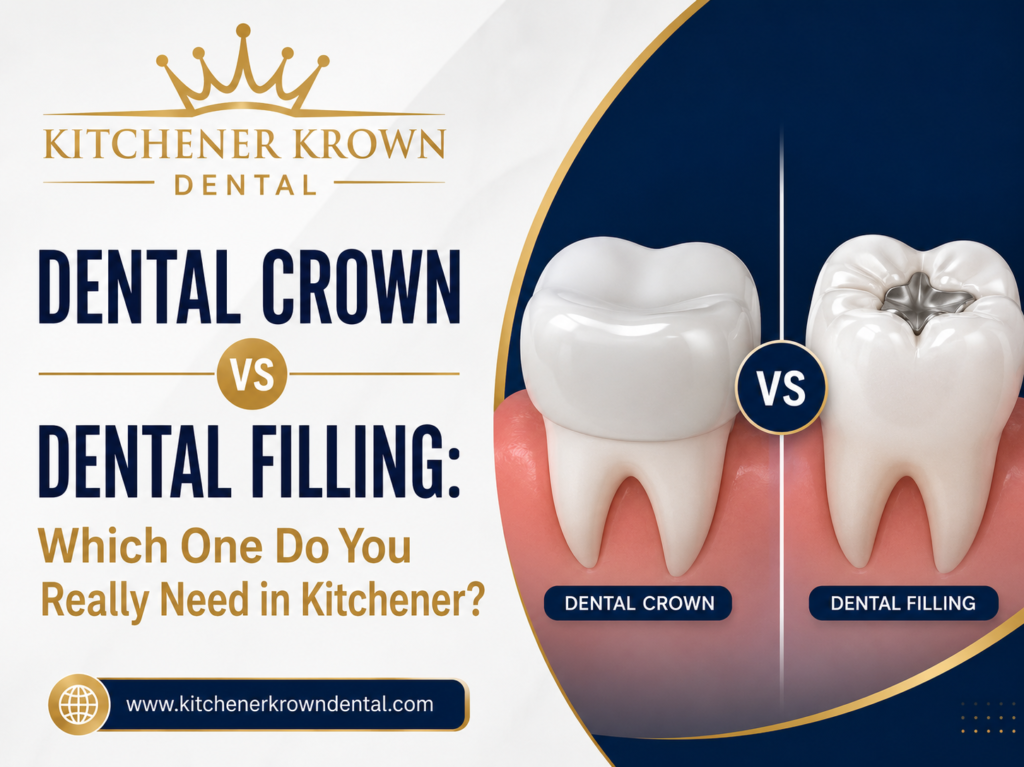
Dental Crown vs Dental Filling: Which One Do You Really Need in Kitchener?

If your tooth has a small cavity or minor damage, a dental filling may be enough. However, if the tooth is severely decayed, cracked, weakened, or has undergone root canal therapy, dental crowns are often the better long-term solution. The right treatment depends on how much healthy tooth structure remains and your dentist’s evaluation. For many patients in Kitchener, choosing the correct restoration early can help prevent future complications, preserve natural teeth, and reduce the need for more extensive dental treatment. Dental Crown vs Dental Filling at a Glance Factor Dental Filling Dental Crown Purpose Repairs small areas of damage Restores and protects the entire tooth Best For Small to moderate cavities Large cavities, cracks, weakened teeth Tooth Coverage Partial Full coverage Durability Good for minor restorations Excellent for heavily damaged teeth Treatment Time Usually one visit Typically two visits Strength Moderate High Longevity Several years Often 10–15+ years with proper care Protection Against Fractures Limited Excellent Understanding Dental Crowns and Dental Fillings When patients visit a dentist because of tooth pain, sensitivity, decay, or a cracked tooth, one of the most common questions is whether they need a filling or a crown. Both treatments restore damaged teeth, but they serve different purposes. A filling repairs a specific damaged area of a tooth, while a dental crown completely covers and protects the visible portion of the tooth. The decision depends on the amount of tooth structure remaining, the location of the tooth, bite pressure, and long-term oral health goals. At Kitchener Krown Dental, treatment recommendations focus on preserving natural teeth while ensuring patients receive durable and functional restorations through our restorative dental care services. What Is a Dental Filling? A dental filling is a restorative treatment designed to repair teeth affected by tooth decay, small fractures, or minor wear. After removing the damaged portion of the tooth, the dentist fills the space with a durable material, most commonly composite resin. Fillings are often recommended when: Modern composite fillings closely match the colour of natural teeth, making them a popular choice for both front and back teeth. Benefits of Dental Fillings However, fillings may not provide sufficient support when a tooth has lost a significant amount of its natural structure. What Are Dental Crowns? Dental crowns are custom-made restorations that completely cover the visible portion of a damaged tooth. They function like a protective cap and are designed to restore strength, shape, appearance, and functionality. Dental crowns may be made from: Today’s crowns are highly aesthetic and closely resemble natural teeth. Learn more about our dental crown and bridge treatments. Benefits of Dental Crowns For severely damaged teeth, dental crowns are often considered the gold standard of restorative dentistry. When Is a Filling the Right Choice? Many people search online for: A filling is generally recommended when the damage is relatively small. Small to Moderate Cavities When decay affects only a limited area of the tooth, a filling can effectively restore function and appearance. Minor Chips and Wear Small cosmetic imperfections often do not require full tooth coverage. Healthy Remaining Tooth Structure If most of the natural tooth remains intact, a filling is often sufficient. Early Treatment Routine dental examinations can detect cavities before they become extensive enough to require dental crowns. When Do You Need Dental Crowns? There are situations where a filling simply cannot provide the support necessary to preserve the tooth. Large Cavities When decay destroys a substantial portion of the tooth, the remaining structure may become too weak to support a filling. Cracked Teeth Cracks can spread over time due to chewing pressure. Dental crowns help stabilize the tooth and reduce the risk of further damage. After Root Canal Therapy Teeth treated with root canal therapy often become more brittle. Dental crowns help protect these teeth from fractures. Broken Teeth A severely fractured tooth often requires full-coverage protection. Large Existing Fillings Older teeth with multiple large fillings may eventually weaken. A crown can provide additional structural reinforcement. Severe Tooth Wear Patients who grind or clench their teeth may experience significant enamel loss that requires comprehensive restoration. The Biggest Risk of Choosing a Filling When You Need a Crown One of the most common mistakes is delaying a recommended dental crown. Although a filling may initially appear less expensive, it can create additional complications when placed in a severely weakened tooth. Potential risks include: Choosing the appropriate restoration from the beginning often leads to better long-term outcomes. Dental Crown vs Filling: Which Lasts Longer? Longevity is a major factor for many patients. Dental Fillings Most composite fillings can last several years with proper care. However, larger fillings tend to experience greater wear and stress. Dental Crowns Dental crowns are designed to withstand significant chewing forces and often last 10 to 15 years or longer. Factors affecting lifespan include: For heavily damaged teeth, crowns generally offer greater longevity and durability. Dental Crown Materials Explained Not all crowns are identical. Porcelain Crowns Popular for front teeth because of their natural appearance. Zirconia Crowns Known for exceptional strength and durability. Ceramic Crowns Offer excellent aesthetics and biocompatibility. Porcelain-Fused-to-Metal Crowns Combine strength and aesthetics. Your dentist will recommend the most appropriate material based on the location of the tooth and your treatment goals. What Happens During a Dental Crown Procedure? Patients often ask whether getting a dental crown is complicated. The process is straightforward and comfortable. Step 1: Examination Your dentist assesses the tooth using clinical evaluation and digital imaging. Step 2: Tooth Preparation The damaged tooth is reshaped to accommodate the crown. Step 3: Digital Impressions Precise digital scans ensure an accurate fit. Step 4: Temporary Crown A temporary restoration may be placed while the permanent crown is fabricated. Step 5: Final Placement The custom crown is securely bonded to the tooth. The result is a restoration that looks, feels, and functions like a natural tooth. Cost Considerations: Dental Crown vs Filling Patients often wonder whether they should save money by choosing a filling. While fillings generally have a lower

Scroll to Top